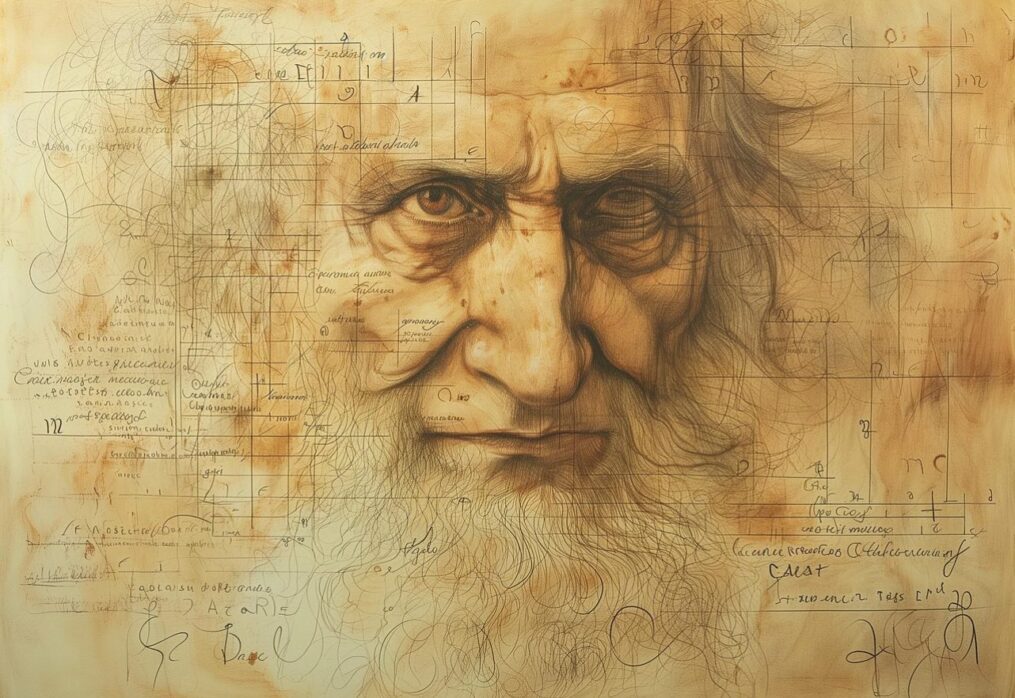

Where do the myths surrounding Leonardo da Vinci come from? Explore the legends, exaggerated claims about his inventions, imaginative interpretations and what historical sources actually reveal.
TABLE OF CONTENTS
- Why Leonardo became a legendary figure
- The myth of the all-knowing genius: what’s true?
- Leonardo’s inventions: fact and fiction
- Leonardo’s mysterious works and the fascination with their interpretations
- Leonardo’s real life and his romanticised image
- Why do we create myths about Leonardo?
Why Leonardo became a legendary figure
The fame of Leonardo da Vinci is not simply the result of his achievements, but also of the stories that have developed around him over the centuries, blending historical facts with myths and legends.
Leonardo was undoubtedly a versatile artist, but he was also a scientist and, even today, many people regard him as a genius and almost a prophet of technology and modernity.
Leonardo is often portrayed as all-knowing and visionary, but many of these interpretations have little to do with the real man and reflect what audiences want to believe rather than what historical sources reveal. To understand who Leonardo really was, we need to separate history from legend.
Inside Leonardo’s World
Experience interactive machines and inventions at the Leonardo Da Vinci Exhibition in Rome
The myth of the all-knowing genius: what’s true?
Leonardo is often described as an all-knowing man because his knowledge and interests ranged from painting to anatomy, as well as science and engineering.
This image is fascinating because it reflects our desire to find extraordinary figures in history, but it is not entirely accurate. Leonardo certainly had an insatiable curiosity that drove him to explore natural phenomena, the human body, landscapes, mechanisms and movement. However, he was not an isolated genius, but a man surrounded by skilled collaborators and working within a thriving intellectual environment. Many of his ideas also grew out of observations shared by other scholars of the 15th century.
The myth of the man who anticipated every modern invention stems more from our desire to see the origins of the future in the past than from historical evidence. Although Leonardo was a brilliant observer, he was certainly not a prophetic inventor.
Leonardo’s inventions: fact and fiction
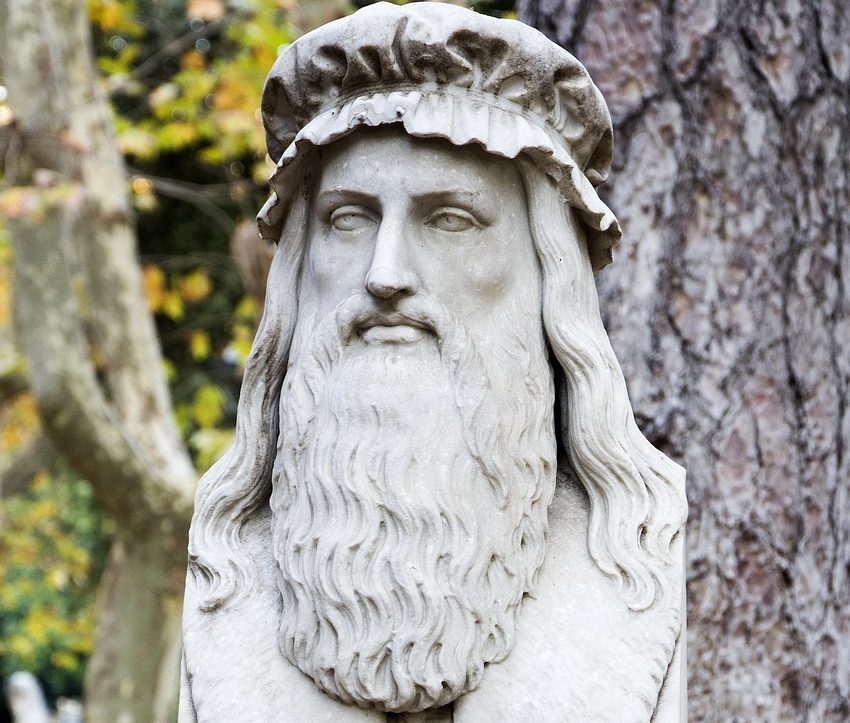
The idea that Leonardo was a visionary capable of inventing almost anything is both fascinating and widespread. One of the areas in which myths about Leonardo have flourished most is the machines he designed.
For example, it is widely believed that Leonardo’s inventions included the helicopter, the tank and the submarine. However, his designs were more theoretical studies than prototypes ready for practical use.
The aerial screw, considered a precursor to the modern helicopter, could not have taken off using the materials available at the time. Similarly, the armoured vehicle was more an exercise in mechanics than a functioning weapon, while his flying machine imitated the flapping of wings but was neither built nor tested.
These machines were not futuristic inventions, but the result of Leonardo’s investigations, developed to understand how movement works in nature rather than to create practical devices or industrial machinery.
Leonardo’s mysterious works and the fascination with their interpretations
Myths about Leonardo also surround his art and paintings, particularly the Mona Lisa, probably the painting most frequently associated with legendary stories and interpretations.
The enigmatic smile of the Mona Lisa, the landscape suspended between reality and imagination, and the softness of her gaze have inspired all kinds of theories, involving hidden codes, mysterious identities and esoteric symbolism. In reality, however, there is no evidence for any of these claims in the historical sources, and none of Leonardo’s notes suggests the presence of hidden meanings. The painting appears enigmatic because Leonardo sought to capture the inner life of a person through their expression, rather than create a puzzle to be solved.
A similar argument applies to The Last Supper, which has often been interpreted as a cryptic message concealed within musical scores, secret geometries and heretical symbols. Once again, the painting was created around a very clear narrative idea: to depict the psychological reactions of the twelve apostles to the announcement of the betrayal. The work’s complexity is artistic rather than esoteric, yet its extraordinary emotional intensity has inspired an endless stream of myths that continue to shape public perceptions today.
Leonardo’s real life and his romanticised image
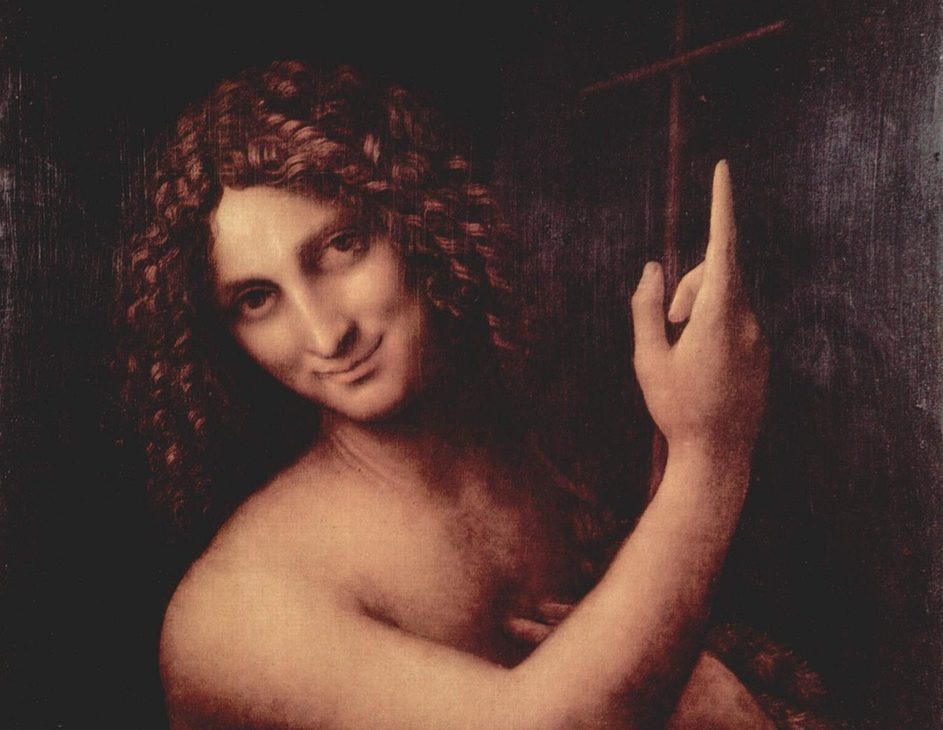
Another deeply rooted legend portrays Leonardo as a solitary, enigmatic and misunderstood man, perhaps because he never married and because of certain habits, such as his use of mirror writing.
Historical sources, however, show that he was fully integrated into court life, surrounded by pupils and assistants, involved in collaborative projects and part of an extensive network of professional relationships.
As for his mirror writing, it is often interpreted as a secret code, but it may simply have been a practical habit for a left-handed person like Leonardo, helping him avoid smudging the ink as he wrote.
Leonardo is also described as absent-minded, inconsistent or troubled, but this impression may stem from the complexity of his analytical approach and the loss of many of his notes, which makes it difficult to fully understand his thinking and work, rather than from any particularly secretive or mysterious lifestyle. Even the suggestion that he had ADHD or was incapable of completing projects reflects modern interpretations. Leonardo was an inquisitive researcher who was often more interested in the process than the final result, and many of his unfinished works may reflect this aspect of his personality or simply the technical difficulties he encountered.
Another legend suggests that Leonardo was a committed vegetarian. It is possible that he avoided certain foods because of personal sensitivities or philosophical beliefs, but there is no conclusive evidence that he consistently followed a vegetarian diet.
Finally, myths and legends about Leonardo also concern his sexuality, often portrayed as mysterious or dramatic. Historical sources mainly document his professional relationships and a social context very different from our own, without establishing whether he had a lover or revealing much about his romantic or sexual life.
Why do we create myths about Leonardo?
The enduring popularity of legends surrounding Leonardo may have less to do with what we actually know about him than with what we would like him to have been. In an age dominated by technology and speed, Leonardo represents a combination of creativity, intelligence, vision and intellectual freedom that few other historical figures embody.
These myths emerge from the gap between the complexity of his thinking and the modern public’s desire for simple explanations. They are stories that attempt to explain the seemingly inexplicable and make sense of a man whose mind still appears to have been far ahead of his time.
The truth, however, is just as fascinating: Leonardo was not a magician, but an exceptionally perceptive observer; not a prophet, but a researcher; not a solitary hero, but a man deeply immersed in his own era. And it is precisely this reality, rather than the myths, that makes his legacy so compelling today.
Leonardo Live
Visit the Leonardo Da Vinci Exhibition in Rome and discover his machines, inventions, and much more first-hand
This article was originally published in Italian on 25 November 2025
You can read the Italian version of this article here >