
From his stay at the Vatican to his studies of anatomy, mechanics, optics and geometry: what Leonardo da Vinci did in Rome between 1513 and 1516 and why he left the city for France.
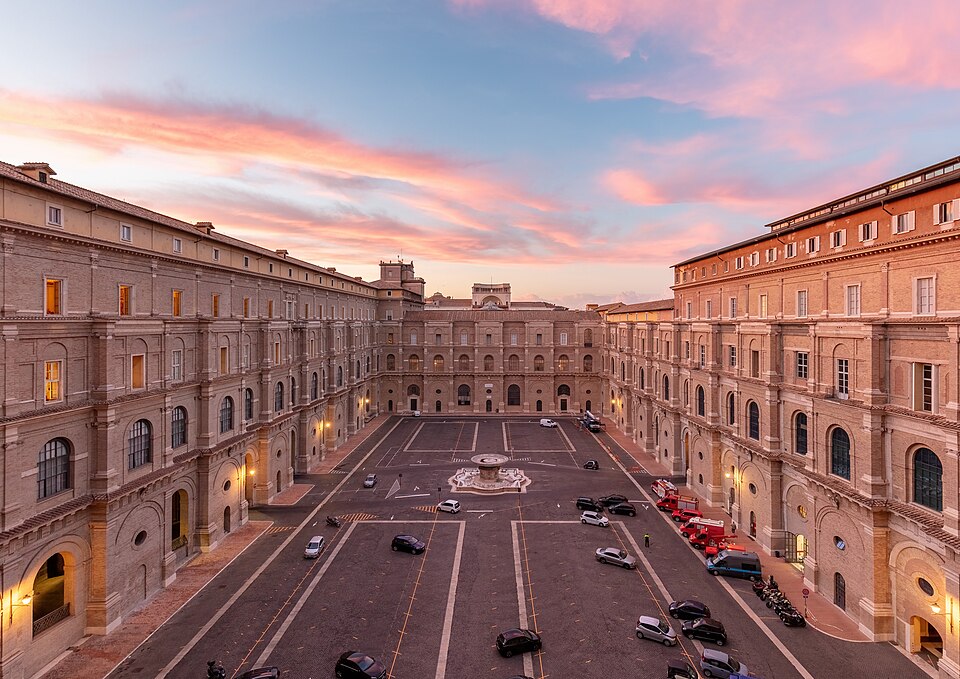
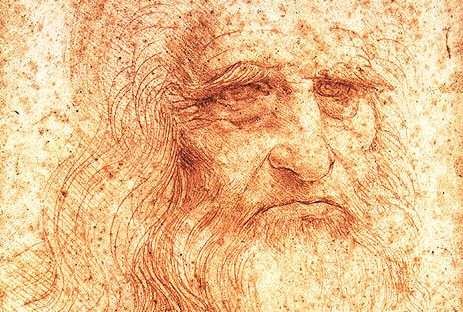
Leonardo da Vinci lived in Rome between 1513 and 1516, during a particularly important period for the city, which under Pope Leo X was one of the great artistic centres of the Renaissance. Leonardo arrived in the capital in his sixties, where he was welcomed by Giuliano de’ Medici, the pope’s brother, and stayed in apartments at the Vatican Belvedere with some of his collaborators. His Roman years were not among his most productive in terms of painting: while Raphael and Michelangelo were at the centre of major papal artistic projects, Leonardo devoted himself mainly to studies of mechanics, geometry, optics, anatomy and natural phenomena. He designed machines, conducted experiments and continued to observe the world with the curiosity that had characterised his entire life. His stay in Rome, however, was also marked by difficulties and conflicts, and in 1516 Leonardo accepted an invitation from Francis I and left Italy for good to move to France.
TABLE OF CONTENTS
- Leonardo arrives in Rome
- Leonardo da Vinci and his stay at the Vatican
- What did Leonardo da Vinci do in Rome?
- Anatomical studies and the difficulties Leonardo encountered in Rome
- Leonardo, Raphael and Michelangelo in Renaissance Rome
- Why did Leonardo leave Rome?
Leonardo arrives in Rome
Leonardo da Vinci arrived in Rome in 1513, at a relatively late stage in his life. On 24 September, he left Milan accompanied by some of his closest collaborators, including Francesco Melzi and Salaì, heading for a city that was experiencing one of the most extraordinary artistic periods in its history.
In March of that same year, Giovanni de’ Medici had been elected pope, taking the name Leo X, and Rome had become a vast centre of artistic activity where some of the greatest artists of the Renaissance were at work. Raphael was working on the Vatican Rooms and other important papal commissions, while Michelangelo had already completed the ceiling of the Sistine Chapel and remained one of the most important artistic figures of the time.
Leonardo therefore arrived in a particularly vibrant environment, but his position was different from that of the two younger artists. He did not move to Rome to undertake a major work commissioned by the pope: it was primarily Giuliano de’ Medici, Leo X’s brother, who offered him protection and became his main point of reference during his stay in Rome.
Inside Leonardo’s World
Experience interactive machines and inventions at the Leonardo Da Vinci Exhibition in Rome
Leonardo da Vinci and his stay at the Vatican
Thanks to Giuliano de’ Medici, Leonardo spent much of his time in Rome with his collaborators in accommodation in the Vatican Belvedere, one of the most fascinating areas of the papal complex, where Julius II had begun to assemble an important collection of ancient sculptures and Leo X continued the project of his predecessor.
Leonardo therefore had the opportunity to live in close contact with an environment where ancient art, architecture and Renaissance culture coexisted. Among his surviving drawings is a sketch of the Sleeping Ariadne, the famous statue displayed in the Belvedere garden, providing direct evidence of his interest in what he saw around him.
Unlike Raphael and Michelangelo, Leonardo did not receive major public commissions, so he did not devote himself to producing paintings but focused primarily on understanding the mechanisms of nature and machines, dedicating much of his time to scientific and technical studies.
What did Leonardo da Vinci do in Rome?
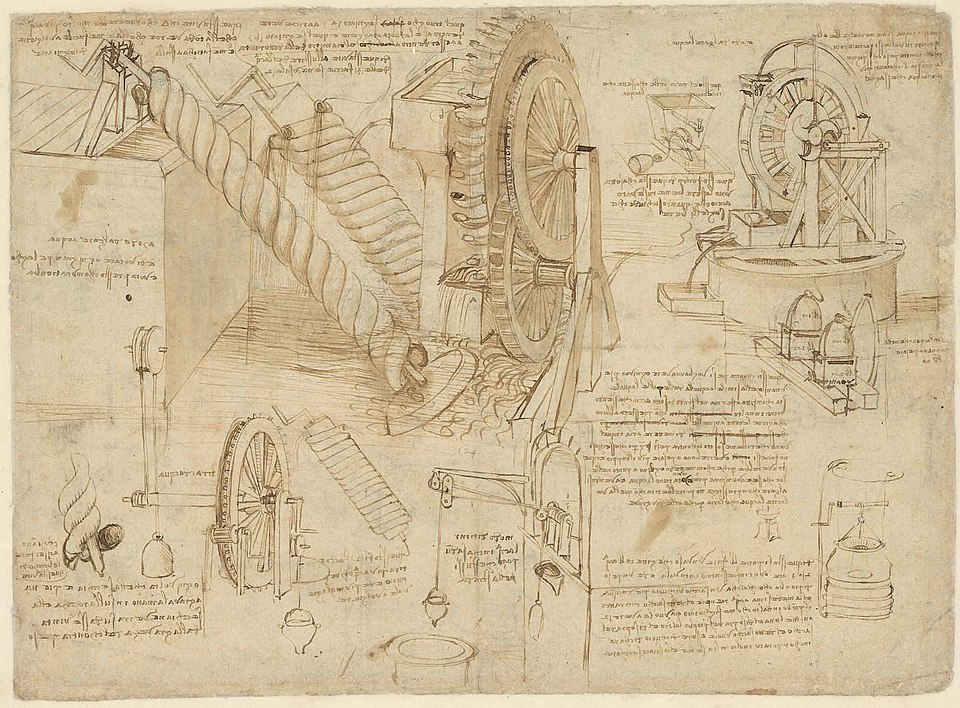
During the years he spent in Rome, Leonardo worked on numerous subjects at the same time, as he did throughout his life. Sources document studies of mechanics, optics, geometry and anatomy, as well as observations of nature and research related to the construction of machines. He searched for fossils on nearby Monte Mario, investigating the formation of the Earth and the presence of marine remains in areas far from the sea, subjects he had already explored in his notebooks.
Particularly interesting are the mechanical projects preserved in the Codex Atlanticus and dated to Leonardo’s years in Rome. Some drawings show machines designed to produce large ropes and cables, which may have been connected to major construction works, perhaps the building of the new St Peter’s Basilica or projects to drain the Pontine Marshes. During these years, Leonardo also became interested in hydraulic engineering and the transformation of the landscape.
Other notes document geometrical studies, research into mirrors and optics, and continuous attempts to improve mechanical devices. Even in Rome, Leonardo continued to work as he always had: he observed a problem, broke it down into its individual elements, drew possible solutions and repeatedly returned to the same pages to modify them, transforming his notebooks into an enormous laboratory in which painting, mathematics, anatomy, engineering and natural phenomena were all part of a single field of research.
Anatomical studies and the difficulties Leonardo encountered in Rome
Leonardo had studied the human body for many years through direct observation and dissection, producing extremely detailed anatomical drawings. During his stay in Rome, he attempted to continue this research at the Hospital of Santo Spirito, but encountered some difficulties.
A particularly interesting account can be found on a sheet of the Codex Atlanticus dating from around 1515. Leonardo drafted a letter addressed to Giuliano de’ Medici in which he complained about the behaviour of some German assistants working with him at the Belvedere. One of them allegedly criticised Leonardo’s anatomical studies to the pope, causing problems for him at the hospital and consequently hindering his research.
A significant episode, as it reveals a period in Rome that was less peaceful than Leonardo had probably hoped. Although the protection of Giuliano de’ Medici guaranteed him a privileged position, it did not always give him the freedom he needed to pursue all his research without interference.
Leonardo, Raphael and Michelangelo in Renaissance Rome
One of the most fascinating aspects of Leonardo’s stay in Rome is the simultaneous presence in the city of Leonardo, Raphael and Michelangelo, three of the greatest figures of the Renaissance, who were all in Rome during the same period.
According to Vatican sources, during his stay in Rome Leonardo had the opportunity to meet Raphael and Giuliano da Sangallo, who was working on St Peter’s Basilica, while any contact with Michelangelo is less well documented. Leonardo and Michelangelo also had a rivalry that dated back to their years in Florence, when they had both been commissioned to create the large battle scenes for the Salone dei Cinquecento in Palazzo Vecchio.
Leonardo, Raphael and Michelangelo had different roles in Rome: Raphael enjoyed the full confidence of the papal court and was engaged in numerous commissions, while Michelangelo had completed the ceiling of the Sistine Chapel just a few years earlier and maintained a complex but central relationship with the papacy. Leonardo, on the other hand, despite his fame, remained relatively on the sidelines of the major artistic projects promoted by Leo X.
The Roman years therefore also reveal a generational shift. Leonardo was by then the great master who had opened up new paths in painting and the study of nature, while a new generation was dominating the major building and artistic projects of papal Rome.
Why did Leonardo leave Rome?
Leonardo’s stay in Rome ended in 1516, the year Giuliano de’ Medici, his main patron in the city, died. Shortly after his death, Leonardo accepted an invitation from King Francis I of France and left Italy for good, moving to Amboise with Francesco Melzi. In France, he received the title of first painter, architect and mechanic to the king and settled at the Clos Lucé, where he spent the final years of his life until his death in 1519.
Rome therefore represented a kind of transition between two phases of his life. It was not the city where he created his most famous works, but the years he spent at the Vatican Belvedere offer a particularly clear picture of Leonardo in his later years: a man who continued to study anatomy, geometry, optics, mechanics and natural phenomena even when painting was no longer the sole focus of his work.
Leonardo Live
Visit the Leonardo Da Vinci Exhibition in Rome and discover his machines, inventions, and much more first-hand.
You can read the Italian version of this article here >