
Many aphorisms attributed to Leonardo are actually fake, but there are ways to recognise authentic quotations and his original writings.
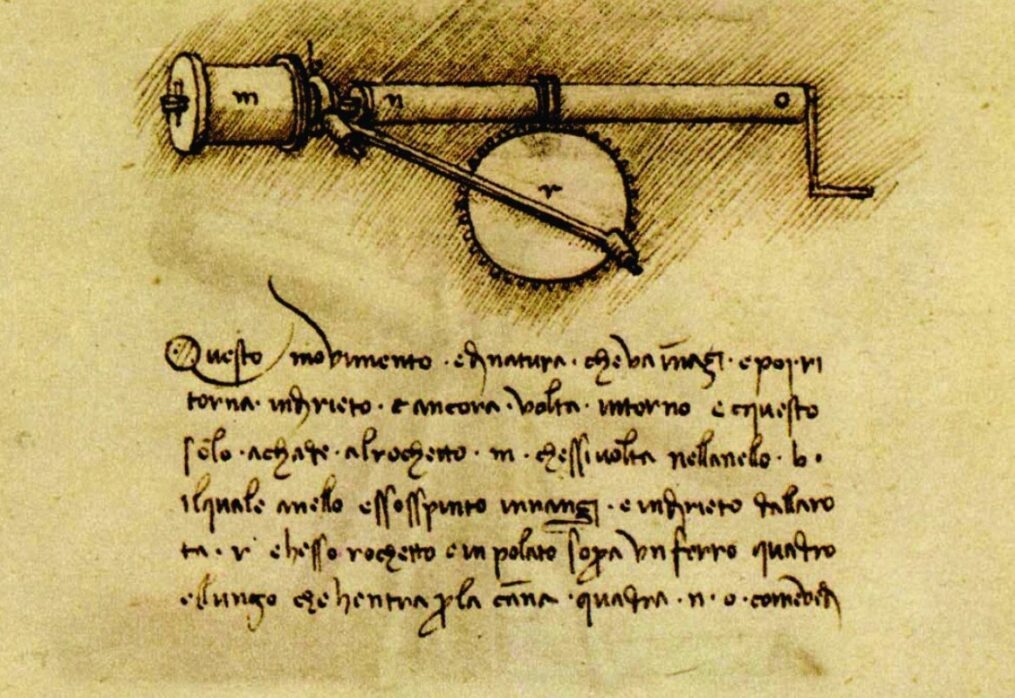
Attributing authentic aphorisms to Leonardo da Vinci is much more complicated than it might seem. His writings were not intended as collections of complete sayings, but rather as working notes scattered across manuscripts, notebooks and loose sheets. Leonardo recorded ideas, observations and experimental findings, not moral maxims or romantic reflections. Many quotations attributed to Leonardo are therefore actually false, modern or paraphrased, born from the desire to see him as a kind of prophet or master of wisdom. Leonardo’s authentic aphorisms are few and concern painting, nature, light, the scientific method and the importance of direct experience. Recognising them requires careful attention to language, context and, above all, the original source. The phenomenon of misattributed quotations reveals just how strong the contemporary fascination with Leonardo remains, but also how important it is to distinguish myth from the real man in order to truly understand him.
TABLE OF CONTENTS
- Why is it difficult to attribute aphorisms to Leonardo?
- Which of Leonardo’s aphorisms are authentic?
- Why are so many aphorisms fake?
- How to recognise an authentic quotation
Why is it difficult to attribute aphorisms to Leonardo?
Attributing aphorisms to Leonardo da Vinci is complicated because he never intended to write a work containing aphorisms and quotations.
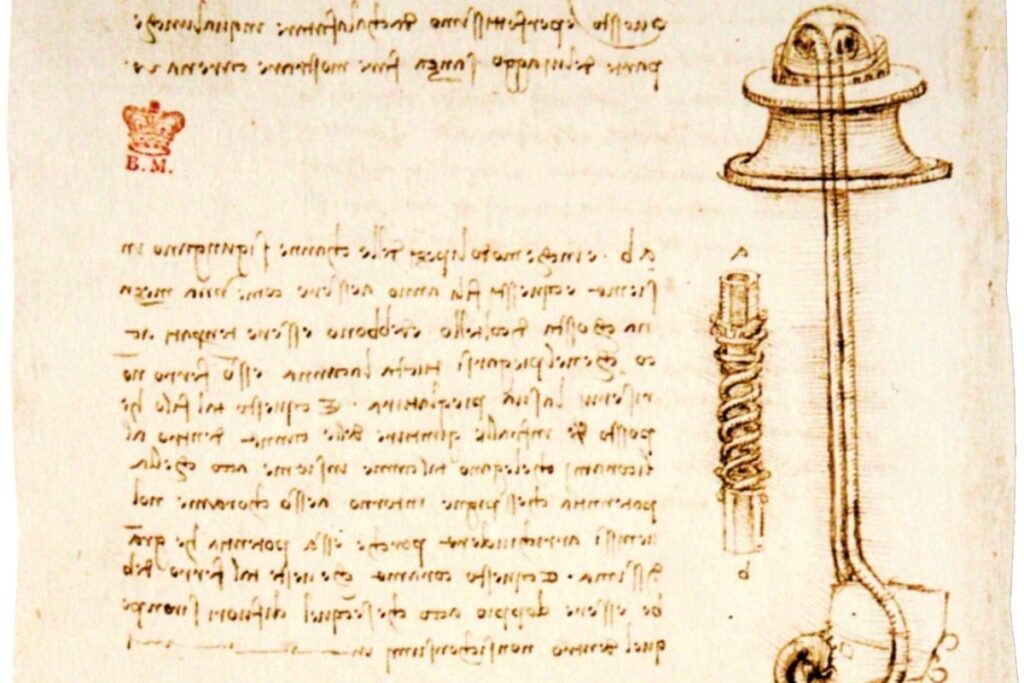
The codices that have survived, such as the Codex Atlanticus, the Codex Arundel, the Codex Leicester and the manuscripts of the Institut de France, were not organised by Leonardo himself but are the result of later collections, often assembled after his death.
Leonardo’s notes are therefore not finished texts, but rather a collection of scattered sheets, notebooks, sketches and working notes. Leonardo recorded what he saw, what he wanted to investigate, what intrigued or troubled him. He wrote for himself, not for the public.
Consequently, Leonardo’s notes do not reflect a moralistic or philosophical style, but reveal the thoughts of a researcher who did not want to forget an idea, a detail or an intuition. His short statements, when they appear, are working tools rather than profound or transcendent messages. Moreover, what we read today is often the result of later transcriptions, as the original sheets were separated or rearranged at different times.
The Treatise on Painting, one of the main sources of his famous quotations, is, for example, a 17th-century compilation assembled by his pupils, rather than a text written entirely in his own hand. Although its content is reliable, it does not always allow for direct and precise verification against the original manuscript. For this reason, not only is it difficult to identify Leonardo’s authentic quotations and aphorisms, but interpreting them can also be complicated when precise references to the codex, folio or context are missing.
Inside Leonardo’s World
Experience interactive machines and inventions at the Leonardo Da Vinci Exhibition in Rome
Which of Leonardo’s aphorisms are authentic?
Leonardo’s authentic aphorisms are few and come from sources such as the Treatise on Painting and critical editions by modern scholars, including the famous edition by Edmondo Solmi, who collected fragments directly from the codices.
These statements concern painting, light, nature, experience, ingenuity and the scientific method. They are generally short because Leonardo wrote them as reminders, not because he was deliberately seeking an aphoristic style.
For example, when reflecting on the fundamental role of experience, Leonardo writes that knowledge comes from direct verification rather than the passive acceptance of authority. This idea gives rise to short, incisive statements, such as his observations on “experience” as the foundation of science, which appear in several passages of the codices and which Solmi brought together in a readable form.
Another group of authentic statements concerns painting as a mental activity, a central concept in the Treatise, where Leonardo argues that a good painter must represent not only the outward appearance of a subject but also the “conception of the mind”, a revolutionary insight for his time.
Leonardo’s genuine aphorisms are therefore not moral, psychological, motivational or spiritual sayings, but rather technical statements that reflect his way of reasoning. As a result, they are concise, straightforward, practical and rooted in his scientific and artistic practice.
Why are so many aphorisms fake?
The main reason why so many fake aphorisms can be found is that Leonardo has become a symbol of universal genius, a man often surrounded by myths and legends and to whom extraordinary statements can easily be attributed.
The transformation of Leonardo’s image from a historical figure into a global icon has created fertile ground for the invention of evocative quotations, many of which first appeared in the 20th century, for example in popular science books, novels or works of entertainment. Some have circulated only since the 1960s, such as the famous quotation about flying, which does not appear in any codex and which scholars have shown to be a modern creation.
Another reason is that Leonardo’s notebooks are difficult to consult because they are scattered around the world, were only partially published until the 20th century, are written in mirror writing and are often extremely concise. These difficulties have encouraged creative interpretations, loose translations, summaries and adaptations in which Leonardo’s voice is filtered through modern sensibilities.
Many quotations attributed to Leonardo are paraphrases of genuine ideas, but expressed in contemporary language that Leonardo himself would never have used.
The internet and social media have further amplified the phenomenon, as an elegant phrase, even if false, can spread through millions of shares and become credible simply because of its popularity. In this process, the real Leonardo is sacrificed in favour of a more poetic, more romantic and simpler version of the man, but one that is also further removed from historical truth.
How to recognise an authentic quotation
Recognising an authentic aphorism by Leonardo requires a philological approach, but there are useful criteria even for those who are not specialists.
The first concerns style: a fluent, modern, romantic or motivational statement is almost certainly false. Moreover, Leonardo wrote in 15th-century Italian, using technical and concrete language in which words such as “experience”, “ingenuity”, “mental discourse”, “demonstration”, “nature” and “necessity” frequently appear.
The second criterion concerns source verification, because an authentic quotation must be traceable to a codex, a numbered folio, a passage from the Treatise on Painting, or an academic collection such as Solmi’s I pensieri di Leonardo da Vinci. If a quotation has no precise reference, or if it first appeared in a modern book, it should be considered suspicious.
The third criterion is to evaluate the content. Leonardo did not write about love, destiny, happiness, self-esteem or personal growth, nor did he discuss morality in the modern sense. His writings are technical, experimental notes related to nature, light, movement, the study of water, bones, shadows and plants. A statement containing an abstract emotion or a “life lesson” belongs to an imaginary Leonardo, not the historical Leonardo.
Finally, the most important criterion is purpose, because Leonardo’s authentic statements were written to reason things through, not to inspire, and are practical tools rather than existential advice.
Recognising the authenticity of an aphorism means accepting Leonardo for who he really was: a restless, experimental, methodical researcher, deeply in love with nature and its secrets. Understanding him in this way, without imposing a romantic and simplified image upon him, does not diminish the fascination of his voice, but makes it more genuine, more human and more extraordinary.
Leonardo Live
Visit the Leonardo Da Vinci Exhibition in Rome and discover his machines, inventions, and much more first-hand.
This article was originally published in Italian on 28 November 2025
You can read the Italian version of this article here >