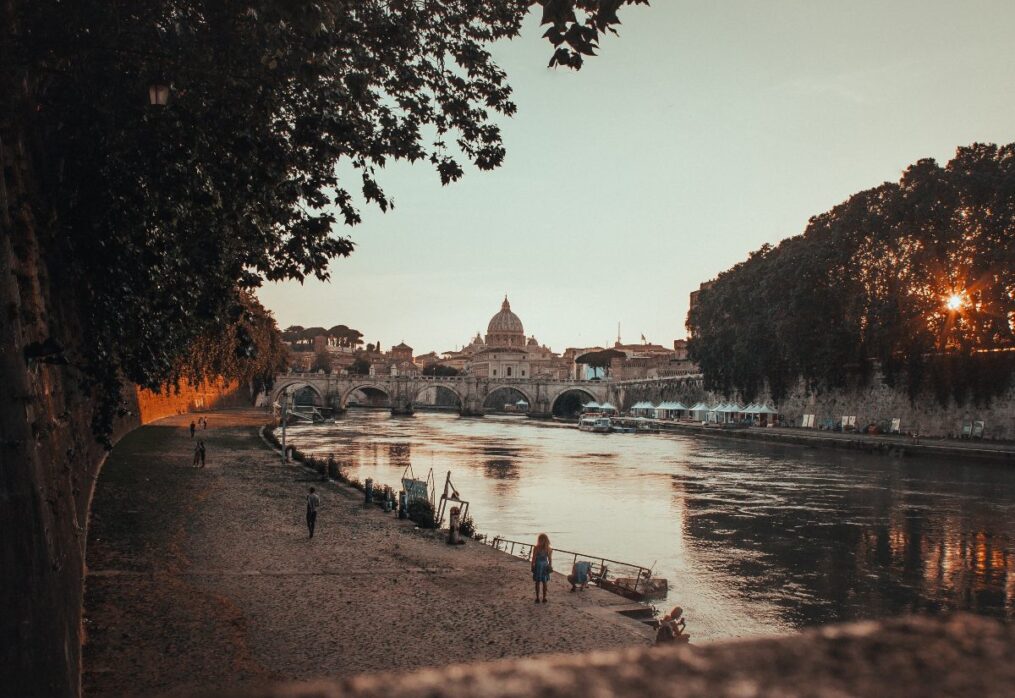

Exploring Rome in autumn calls for a different pace, as the milder temperatures make it possible to stroll leisurely among monuments and squares, alternating outdoor sightseeing with a wide range of cultural activities.
Visiting Rome in autumn, between October and November, allows you to enjoy milder temperatures that make walking through the historic centre pleasant without having to endure the intense summer heat. However, rain is not uncommon in autumn, and the days become progressively shorter, so it is advisable to plan outdoor activities during daylight hours and include some indoor activities to alternate with exploring squares, monuments and parks. The historic centre, Villa Borghese and panoramic viewpoints are particularly suitable for autumn walks, while museums, exhibitions and monumental churches allow visitors to continue sightseeing even in bad weather, as well as enriching the itinerary.
TABLE OF CONTENTS
- Rome in autumn: weather, temperatures and how to plan your days
- Walking around Rome in autumn: historic centre, squares and parks
- Museums and exhibitions: what to see in Rome in autumn and when it rains
- An autumn weekend in Rome: how to plan two days of sightseeing and walks
Rome in autumn: weather, temperatures and how to plan your days
October and November are ideal months for exploring Rome on foot, as temperatures are generally mild, with days that can still be warm around midday but are much more pleasant than in summer. On the other hand, temperatures can drop considerably in the early morning and after sunset, so it is best to dress in layers to be prepared for any situation.
In addition, the likelihood of rain increases during these months, so checking the weather forecast in advance is certainly a good idea when planning an itinerary in Rome, as is bringing a lightweight waterproof jacket and water-resistant, non-slip shoes.
In particular, October can still offer relatively warm and sunny days, suitable for spending many hours outdoors, while November is generally cooler and rainier, making it advisable to plan more indoor visits, especially in the afternoon.
Another important factor is the progressive reduction in daylight hours, accentuated by the return to standard time on the last Sunday of October. This also affects the opening hours of some attractions, which sometimes close earlier because it gets dark sooner, as is the case with the Colosseum Archaeological Park, one of Rome’s most famous attractions.
In general, weather permitting, it is advisable to devote the morning and early afternoon to archaeological sites and longer outdoor walks, leaving museums, exhibitions and other indoor activities for the late afternoon. However, a certain degree of flexibility is essential to adjust the itinerary in case of bad weather.
In Rome with Leonardo
Add the Leonardo Exhibition to your things to do in Rome
Walking around Rome in autumn: historic centre, squares and parks
The cooler temperatures make autumn a particularly good season for exploring Rome’s historic centre on foot, even following routes that might be tiring during the summer. A classic itinerary can start at Piazza Navona, continue towards the Pantheon and the Trevi Fountain, and end at Piazza di Spagna. As the distances between these attractions are relatively short, it is possible to organise a walk lasting just half a day, with stops at cafés or visits to churches along the way.
Visits to the most famous monuments can be alternated with walks through gardens and tree-lined avenues that take on the typical colours of autumn, such as those of Villa Borghese, or with panoramic views like the one from the Pincio terrace, overlooking Piazza del Popolo. Other options include the Janiculum Hill or the Orange Garden on the Aventine Hill, which offers views of the Tiber and numerous monuments across the city. Just remember to check opening hours, as not all places in the city are accessible at all times. For example, the Orange Garden closes earlier, at 6:00 pm, from October to February.
Of course, the length and type of itinerary depend on the time available and the weather conditions, but Rome certainly offers plenty of options for spending anything from a few hours to several days on holiday at any time of year.
Museums and exhibitions: what to see in Rome in autumn and when it rains
Rome offers a wide selection of museums and exhibitions, including the Capitoline Museums in Piazza del Campidoglio, which are particularly convenient to combine with a walk around the Roman Forum and Piazza Venezia for those who want to learn more about the city’s history.
For art lovers, the Borghese Gallery offers the opportunity to admire important works by Bernini, Caravaggio and Canova. A visit can be combined with a walk through Villa Borghese, choosing whether to explore the gardens or the museum galleries first, depending on the weather conditions.
Those looking for an experience different from traditional museums can instead explore exhibitions dedicated to science, technology and inventions. In the centre of Rome, the Leonardo da Vinci Exhibition offers a journey through the machines and ideas of the Renaissance genius, making it a possible stop for anyone wishing to include an interactive cultural activity in their itinerary, for families visiting the city with children, or for those interested in exploring an aspect of the history of art and science.
Even on fine days, spending a few hours in a museum can be enjoyable, especially in the late afternoon, when natural light begins to fade and many outdoor attractions are approaching closing time. However, museums and exhibitions can also provide a welcome refuge in case of heavy rain.
Rain does not prevent visitors from exploring Rome, but when it is particularly heavy, walking around becomes considerably less pleasant, even with an umbrella or waterproof jacket. In these cases, it is better to avoid attractions that are far apart and organise indoor visits by area, limiting the time spent outdoors.
For example, if you are in the historic centre, you can spend the day visiting monumental churches, historic palaces and museums near the Pantheon and Piazza Navona, alternating visits with a break at a café or restaurant. In the Campidoglio area, the Capitoline Museums offer an alternative to walking around the Forums, while near Villa Borghese, museum collections can take priority over the gardens. Interactive exhibitions and science museums are also particularly suitable when bad weather lasts for several hours.
An autumn weekend in Rome: how to plan two days of sightseeing and walks
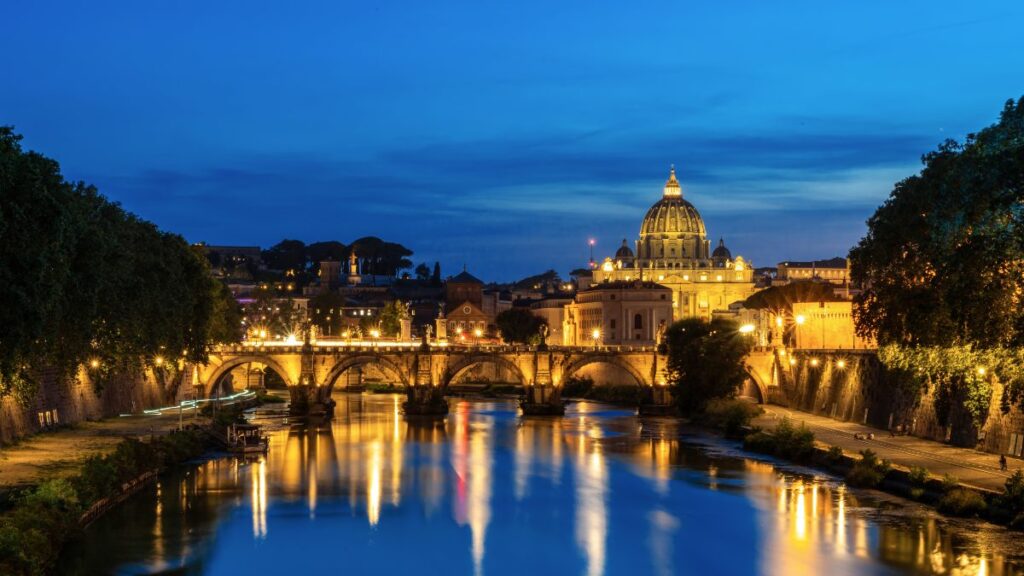
To organise a weekend in Rome in autumn, as we have seen, it is essential to take the weather conditions into account and adapt the itinerary to the season. Walking when temperatures are pleasant, making the most of daylight hours to admire monuments and panoramic views, and spending more time on cultural activities when the weather is less favourable are effective strategies, but flexibility and adaptability are also necessary.
For a short stay, such as a weekend, it is possible to combine monuments, museums and walks, while avoiding overly demanding or rigid schedules and checking opening hours.
The first day can be dedicated to the historic centre, starting in the morning with Piazza Navona and the Pantheon, then continuing to the Trevi Fountain and Piazza di Spagna. If the weather is favourable, the afternoon can be spent exploring Piazza del Popolo and the Pincio, or enjoying a walk along the avenues of Villa Borghese. This itinerary allows visitors to see several of Rome’s iconic landmarks on foot and can easily be shortened in case of rain.
The second day can instead focus on ancient Rome, with a visit to the Colosseum and Roman Forum in the early part of the day, followed by an afternoon at the Capitoline Museums. Those who prefer a less demanding schedule can choose just one major archaeological site and devote the remaining time to a museum, an exhibition or a walk through a different neighbourhood. Visits to the Colosseum require booking a specific time slot, and tickets go on sale on the official website starting 30 days before the planned visit. In this regard, a useful tip is to avoid booking too many attractions with fixed entry times on the same day, as any delays in travelling between them could disrupt the itinerary.
A Unique Idea for Your Visit
For a different kind of experience in Rome, explore the interactive Leonardo da Vinci Exhibition
You can read the Italian version of this article here >