
Renaissance Rome preserves palaces, churches and masterpieces by Raphael, Michelangelo and Bramante, which can be discovered along an itinerary through seven places in the historic centre.
Renaissance Rome can be discovered by walking through the historic centre, where palaces, churches and works of art dating from the 15th and 16th centuries are still preserved. Among the places to see in Renaissance Rome are Palazzo della Cancelleria, the Chiostro del Bramante, Villa Farnesina, Via Giulia, Palazzo Farnese, the Basilica of Santa Maria del Popolo and Bramante’s Tempietto. These places offer an insight into the transformation of the city during the Renaissance and the opportunity to admire works by artists and architects such as Raphael, Michelangelo and Bramante. Some of these sites are just a few minutes’ walk from one another, so you can plan an itinerary through Renaissance Rome starting from Piazza della Cancelleria, where the Leonardo da Vinci Exhibition is also located, and continuing through the streets and squares of the historic centre. Other places, however, require a longer walk and can be included in a full-day itinerary.
TABLE OF CONTENTS
- Renaissance Rome: what to see in the historic centre
- 7 must-see places in Renaissance Rome
- Raphael, Michelangelo, Bramante and Leonardo in Renaissance Rome
- Walking itinerary through Renaissance Rome
Renaissance Rome: what to see in the historic centre
Renaissance Rome can still be recognised today in many palaces, churches, courtyards and streets of the historic centre, especially in the areas between Campo de’ Fiori, Piazza Navona and the Tiber. Between the late 15th century and the 16th century, Rome underwent major architectural and urban planning projects commissioned by the popes and great aristocratic families, who brought some of the most important artists of the time to the city.
The Renaissance transformed the appearance of palaces and religious buildings in particular, introducing more regular facades, courtyards with porticoes, proportions inspired by classical architecture and new decorative solutions. Streets also began to be designed according to more orderly principles, as demonstrated by Via Giulia, one of the most important examples of the city’s urban transformation.
To recognise Renaissance Rome, it may therefore be enough to observe the many examples you come across while walking through the historic centre. These places are often just a short distance from one another, making them perfect for a walking itinerary even if you do not have much time available.
In Rome with Leonardo
Add the Leonardo Exhibition to your things to do in Rome
7 must-see places in Renaissance Rome
Among the places to see in Renaissance Rome are seven particularly interesting stops for discovering the architecture, painting and transformations of the city between the 15th and 16th centuries.
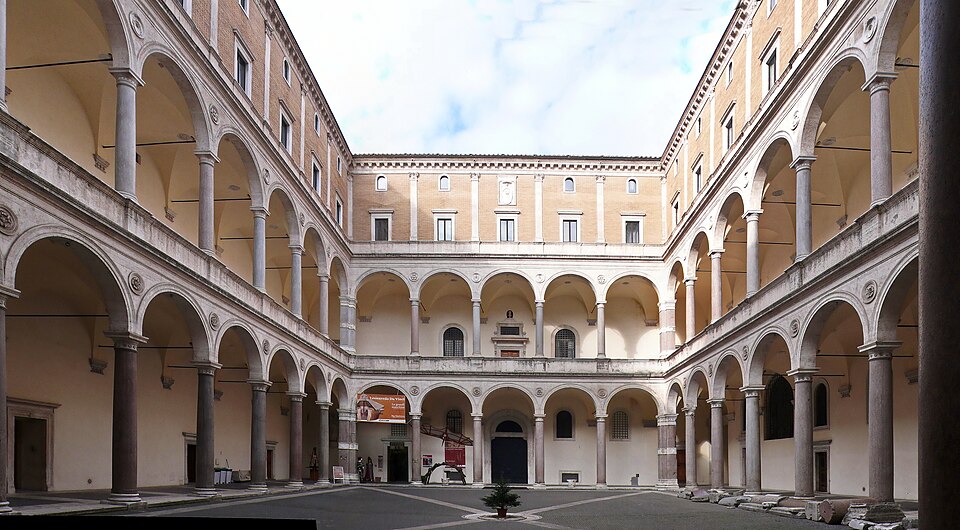
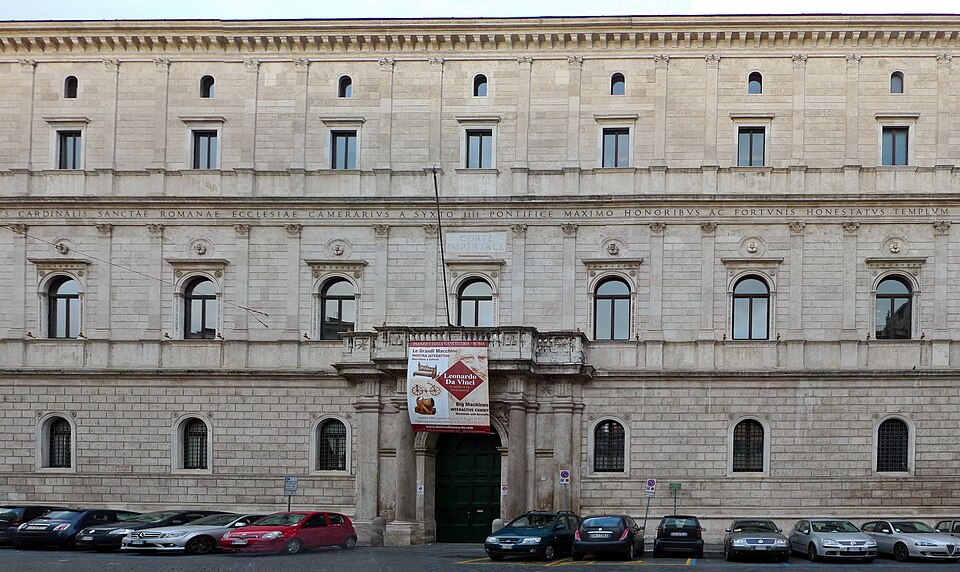
- Palazzo della Cancelleria, located in the square of the same name, near Campo de’ Fiori, is one of the earliest major examples of Renaissance architecture in Rome. Built between the late 15th and early 16th centuries, it features a monumental facade characterised by regularly spaced windows and harmonious proportions, while inside there is a courtyard surrounded by porticoes. The same building also houses the Leonardo da Vinci Exhibition, a permanent exhibition dedicated to the artist’s inventions and studies, offering visitors the opportunity to explore another aspect of Renaissance culture.
- Chiostro del Bramante is located next to the Church of Santa Maria della Pace, just a short walk from Piazza Navona, and is one of the most important examples of Donato Bramante’s architecture in Rome. Built in the early 16th century, it features a courtyard surrounded by two levels of porticoes, with columns, pillars and arches arranged according to regular proportions. Today, the complex also hosts exhibitions and cultural events.
- Villa Farnesina is located in Via della Lungara in Trastevere and was built in the early 16th century for the banker Agostino Chigi. The villa is famous for the frescoes by Raphael and his workshop, including those in the Loggia of Cupid and Psyche, as well as the Galatea painted by Raphael himself. It is a perfect stop for those who want to discover Renaissance painting and see how the rooms of aristocratic residences were decorated with mythological scenes and references to classical culture.
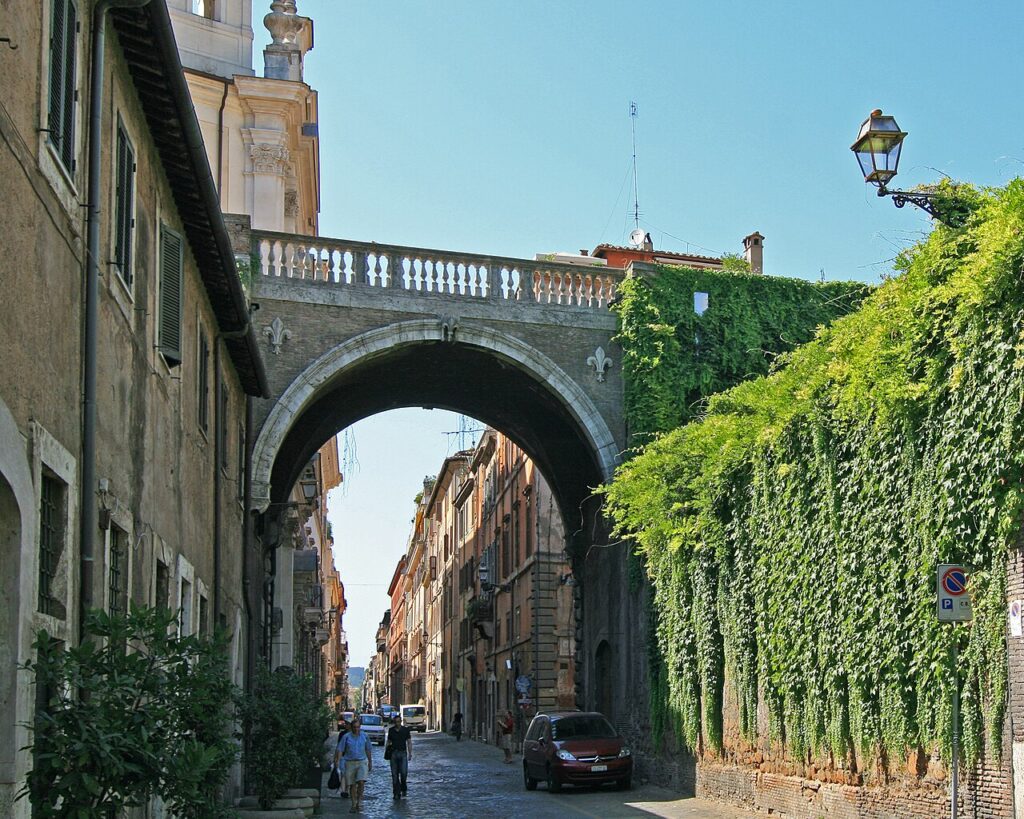
- Via Giulia is one of the most representative streets of Renaissance urban planning in Rome. Commissioned by Pope Julius II and designed by Bramante in the early 16th century, it follows a straight route that reflects the attempt to reorganise part of the city. Walking along this street, visitors can admire historic palaces, churches and views that still preserve some of the appearance of Renaissance Rome.
- Palazzo Farnese is one of the most important Renaissance palaces in the city. The building overlooks the square of the same name, and construction began in the 16th century based on a design by Antonio da Sangallo the Younger. Michelangelo was later involved in the project and was responsible for several features, including the large cornice on the facade. Today, the palace houses the French Embassy and is not freely accessible to the public, but its monumental facade can still be admired from the square.
- Basilica of Santa Maria del Popolo is a place that has undergone numerous transformations over the centuries and preserves works from different periods, including important examples of Renaissance art. One of the most significant is the Chigi Chapel, designed by Raphael for the banker Agostino Chigi.
- Bramante’s Tempietto is located in the courtyard of the San Pietro in Montorio complex, on the Janiculum Hill, and is considered one of the masterpieces of Renaissance architecture. Built in the early 16th century, it has a circular plan surrounded by columns and is directly inspired by models from classical antiquity. Although it is further away than the other stops, it is worth visiting to understand how much importance was placed on proportions and geometry during the Renaissance.
Raphael, Michelangelo, Bramante and Leonardo in Renaissance Rome
The transformation of Rome during the Renaissance is also linked to the presence of great artists who worked in the capital for popes, aristocratic families and other important patrons of the time. Among them were Raphael, Michelangelo and Bramante, who created some of the works that still characterise the city today.
Bramante contributed mainly to the renewal of Roman architecture by introducing solutions inspired by the buildings of classical antiquity. The Chiostro del Bramante, the Tempietto of San Pietro in Montorio and the Via Giulia project reveal his interest in proportions, geometry and the organisation of space.
Raphael, on the other hand, left important examples of his work in both painting and architecture. At Villa Farnesina, visitors can admire some of his most famous frescoes, while the Basilica of Santa Maria del Popolo houses the Chigi Chapel, designed by the artist. To discover more of Raphael’s works in Rome, visitors can also explore the Raphael Rooms inside the Vatican Museums.
Michelangelo worked in Rome for many years and contributed to the creation of fundamental Renaissance works that left an important mark on the appearance of the city, from the ceiling of the Sistine Chapel to the architectural features of Palazzo Farnese.
Leonardo da Vinci also stayed in Rome between 1513 and 1516, during the pontificate of Leo X. During this period, he devoted himself mainly to scientific studies, experiments and projects, without leaving monumental works in the city comparable to those of the other great Renaissance artists. To learn more about his work, visitors can explore the Leonardo da Vinci Exhibition in Piazza della Cancelleria, where reconstructions of his machines and inventions based on drawings from his codices are on display.
Walking itinerary through Renaissance Rome
To plan an itinerary through Renaissance Rome, it is best to start in the historic centre, where you can walk between several buildings. A good starting point is Palazzo della Cancelleria, where, as well as admiring the Renaissance facade, you can visit the Leonardo da Vinci Exhibition.
From here, you can reach Palazzo Farnese in just a few minutes, passing through the Campo de’ Fiori area before continuing towards Via Giulia, which runs parallel to the Tiber and offers the opportunity to discover a less crowded part of the historic centre compared to the main squares. Continuing north, you can head back towards Piazza Navona and reach the Chiostro del Bramante.
This first route takes you through four important sites of Renaissance Rome in approximately three hours, making it perfect even if you only have a morning or an afternoon to explore the city. If you have more time, however, you can cross the Tiber and reach Villa Farnesina in Trastevere, adding a visit dedicated to Raphael’s paintings.
To complete the itinerary with Bramante’s Tempietto, you need to head uphill towards the Janiculum Hill, while the Basilica of Santa Maria del Popolo is located further north, near Piazza del Popolo.
Some sites have restricted opening hours or specific access arrangements, so it is always advisable to check their official websites before setting off, especially for Villa Farnesina, the Chiostro del Bramante and the Tempietto.
A Unique Idea for Your Visit
For a different kind of experience in Rome, explore the interactive Leonardo da Vinci Exhibition.
You can read the Italian version of this article here >