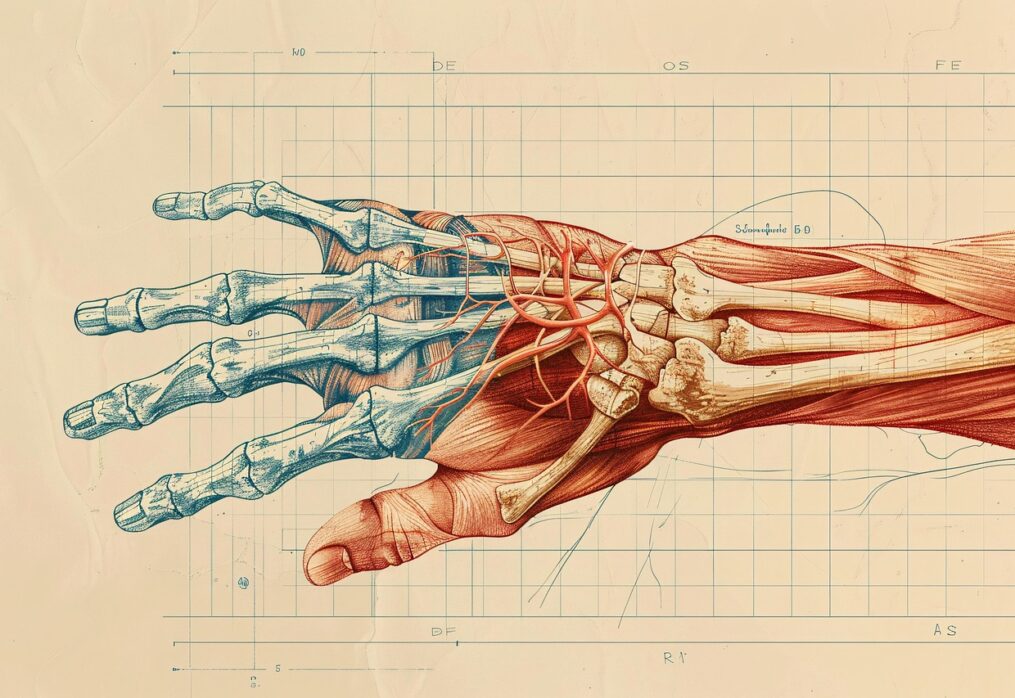

Leonardo da Vinci’s codices are not books, but working notebooks, loose sheets and sketchbooks in which he recorded his thoughts, drawings, calculations and insights, forming a treasure trove of knowledge.
Leonardo da Vinci’s codices are working notebooks and personal papers, not books intended for publication. They contain notes, drawings, calculations and insights that reveal Leonardo’s thought process as his ideas took shape, changed direction and were revised. After his death, the manuscripts passed to Francesco Melzi and, over the centuries, were dispersed and reorganised into major collections now held by various institutions. These include the Codex Atlanticus, the Codex Arundel, the Codex Leicester and the Windsor drawings. The codices reveal a method based on direct observation, “sperienza” (experience), drawing as a tool for reasoning and connections between different natural phenomena. Recurring themes include water, flight, mechanics and anatomy, alongside reminders and unanswered questions. The Leonardo da Vinci Exhibition at Palazzo della Cancelleria offers visitors the opportunity to step into the world of the codices through models, working machines and digital reproductions.
TABLE OF CONTENTS
- What are Leonardo da Vinci’s codices?
- Leonardo’s method revealed through his codices
- Examples, ideas and fascinating facts about Leonardo’s codices
- Leonardo’s codices at the Leonardo da Vinci Exhibition
What are Leonardo da Vinci’s codices?
The codices of Leonardo da Vinci are a collection of manuscripts comprising thousands of sheets, notebooks, notes and bound volumes that have survived over the centuries and are now held in libraries and collections across different countries.
After Leonardo’s death in 1519, his manuscripts were inherited by his pupil Francesco Melzi, who tried to preserve and organise them.
Over the following centuries, Leonardo’s notes were sold and reorganised into collections, giving rise to the major codices we know today, such as the Codex Atlanticus in Milan, the Codex Arundel at the British Library, the Codex Leicester, devoted to the study of water, and the anatomical drawings preserved at Windsor.
The complex history of the codices explains why they are not structured works but rather fragmented archives.
Leonardo never intended to bring them together into a single work or publish them as books, as they consisted of notes and drawings made for his own use, allowing him to record ideas, observations, solutions and questions that had yet to be answered.
Inside Leonardo’s World
Experience interactive machines and inventions at the Leonardo Da Vinci Exhibition in Rome
Leonardo’s method revealed through his codices
Leonardo’s codices offer an insight into his method, which, although different from modern science, anticipated many of its fundamental principles.
In developing his ideas and projects, Leonardo began with direct observation, whether he was trying to understand the movement of water, the flight of birds, the structure of bones, the growth of plants or the way light refracts through the air.
After this initial observation phase, Leonardo turned to drawing, using it as a tool for reasoning, to understand proportions, isolate a particular function and record what he had discovered.
In his notes, Leonardo frequently emphasised that knowledge should come from “sperienza”, meaning experience tested through observation, rather than from the authority of ancient texts. This was undoubtedly a bold approach for his time.
The codices reveal hypotheses, revisions and contradictions, demonstrating that Leonardo’s aim was not to appear infallible but to understand the laws of nature as thoroughly as possible.
His notes also contain numerous analogies and connections between seemingly unrelated phenomena. For example, he compared water to the blood of the Earth, the heart to a hydraulic pump and the branches of trees to the arteries of the human body.
These comparisons are particularly interesting because they reveal his attempt to identify common structures in nature. They also explain why Leonardo’s notebooks bring together studies of different subjects, including anatomy, mechanics, geology and botany, without rigid boundaries between disciplines.
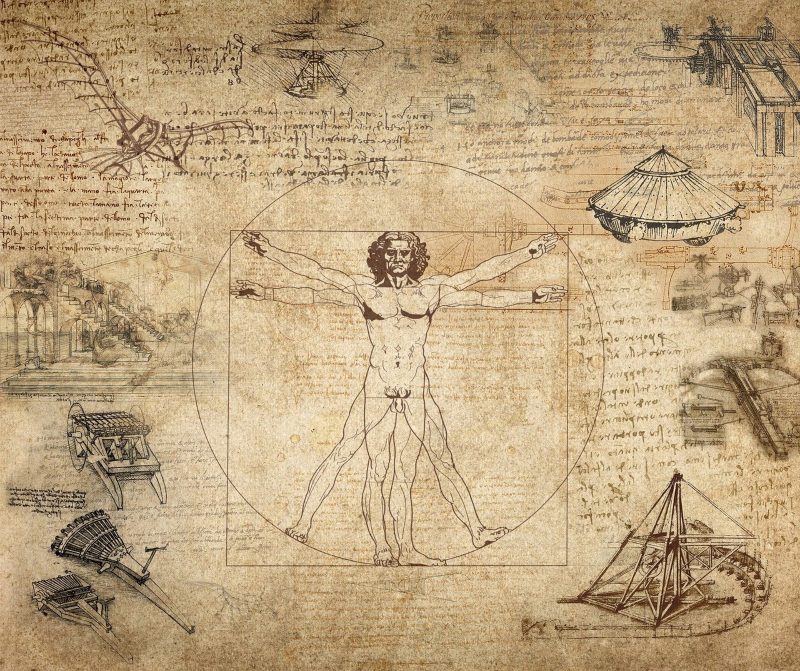
Examples, ideas and fascinating facts about Leonardo’s codices
What can we find in Leonardo’s codices? His notes reflect a curious, restless, tireless and independent mind, capable of moving from the study of a water vortex to the design of a machine for lifting heavy loads, or sketching the profile of a face as part of his artistic studies.
One of the most recurring themes is undoubtedly water. Leonardo observed rivers, waterfalls, waves and currents, trying to understand how water moves and develop ways to control it. His notes include designs for locks, canals and dams, along with technical solutions that would be revisited in the centuries that followed.
Another major subject of Leonardo’s studies was flight, with designs for flapping wings, lightweight structures and experiments aimed at understanding the laws of aerodynamics long before the discipline itself existed.
Leonardo’s studies also extended to anatomy, a field in which he was able to combine art and science through precise drawings of muscles, bones and organs, alongside investigations into how they function, how the body moves and how its different parts relate to one another.
Beyond these subjects, the codices also contain everyday notes, including reminders, lists of things to investigate, unanswered questions and ideas he wanted to remember.
One fascinating detail about Leonardo’s codices and notebooks is that they are often written backwards. Leonardo frequently used mirror writing, writing from right to left. This unusual feature has led some to believe that he was using a kind of secret code, but it may simply have been a natural consequence of his left-handedness: a practical habit rather than an attempt to conceal his discoveries.
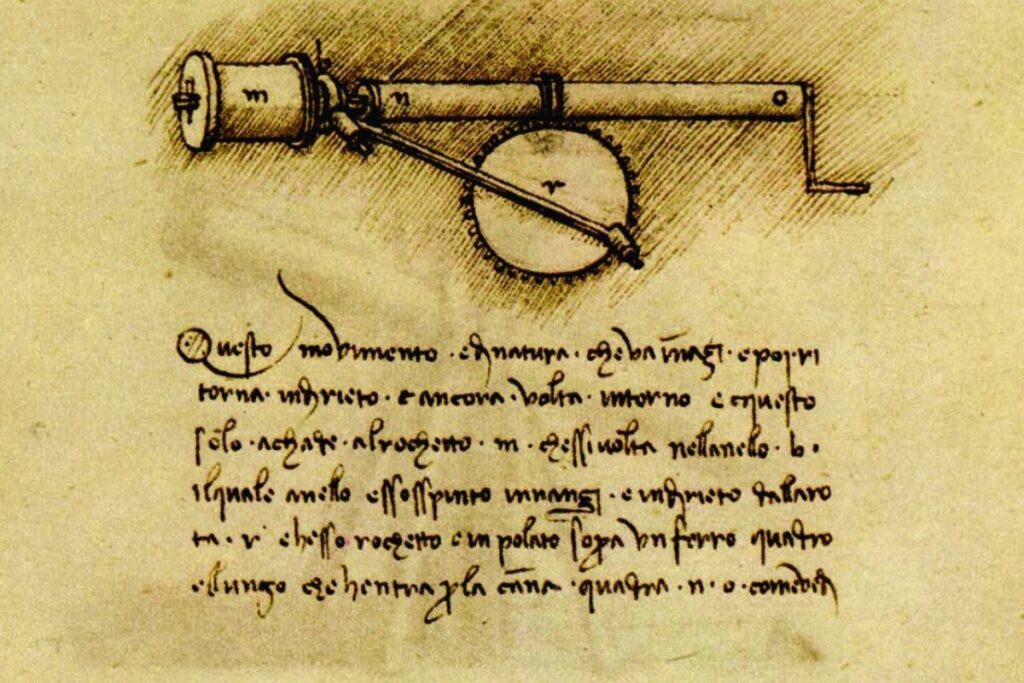
Leonardo’s codices at the Leonardo da Vinci Exhibition
The Leonardo da Vinci Exhibition at Palazzo della Cancelleria offers an engaging way to explore the world of Leonardo’s codices. As the original manuscripts are fragile and rarely displayed, the exhibition uses high-definition digital reproductions, three-dimensional models and working machines built from Leonardo’s drawings, allowing visitors to see his ideas transformed into real objects.
The exhibition rooms explore the main themes found in the codices, including flight, water, mechanics, optics and anatomy, with models that illustrate the transition from drawing to experiment, from an idea to a tangible structure.
During the visit, visitors can also explore the archaeological underground chambers of the palace, where the ancient Euripus of the Campus Martius and the Tomb of Aulus Hirtius are preserved. Here, water, an element Leonardo studied extensively in his codices, becomes a tangible presence, flowing through the ancient spaces, surrounding the structures and reflecting the light.
Leonardo Live
Visit the Leonardo Da Vinci Exhibition in Rome and discover his machines, inventions, and much more first-hand
This article was originally published in Italian on 14 January 2026
You can read the Italian version of this article here >