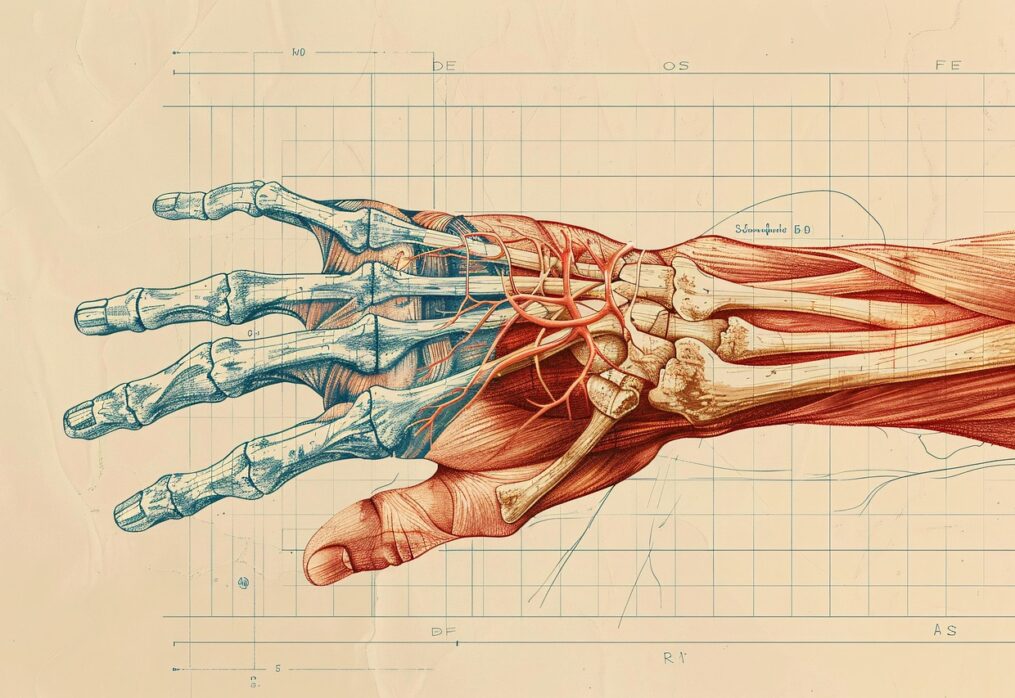

Leonardo da Vinci’s anatomical drawings, experiments and insights that anticipated modern medical science and transformed our understanding of the human body.
Leonardo da Vinci was not only a painter and inventor, but also a tireless observer of the human body. Fascinated by how muscles, bones and organs worked, he devoted years to meticulous dissections and studies that anticipated modern medicine. His notebooks reveal a remarkably accurate and detailed understanding of anatomy, ranging from the structure of the spine and the muscular system to the functioning of the heart as a hydraulic pump, blood circulation and the brain. His research, driven by a desire to depict the human body with realism and harmony, also transformed Renaissance art, influencing painters such as Michelangelo and Raphael. Although his findings were never published during his lifetime, his studies left a lasting legacy in science and art. Today, Leonardo is regarded as a pioneer of modern anatomy, combining direct observation, technical ingenuity and artistic sensitivity to understand and describe the human body in ways that had never been achieved before.
TABLE OF CONTENTS
- Why did Leonardo study human anatomy?
- How did Leonardo carry out dissections and study the human body?
- What anatomical discoveries did Leonardo make?
- What are Leonardo’s most famous anatomical drawings?
- How did Leonardo’s anatomical studies influence medicine and art?
- Leonardo anticipated modern medical science
Why did Leonardo study human anatomy?
Leonardo explored many fields of knowledge, including human anatomy. His boundless curiosity drove him to observe, explore and investigate how the human body worked, seeking to advance both art and science.
As a painter, understanding anatomy allowed him to depict the structure of the body, its movements and muscular tension with exceptional accuracy. However, art was not the only reason for his interest in this subject.
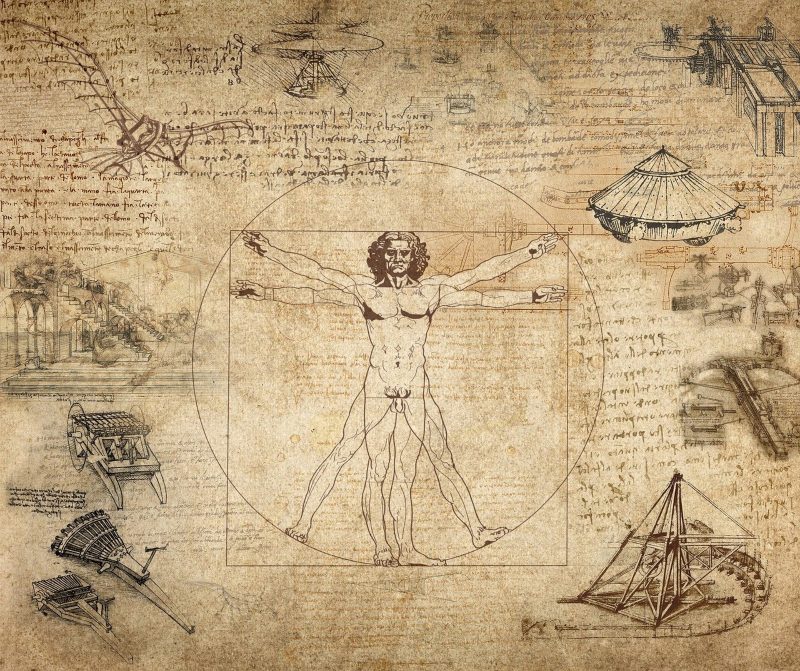
Understanding the mechanisms governing the human body was also important for designing tools and machines operated or used by people, such as certain war machines and devices intended to make human flight possible.
Leonardo’s artistic talent, combined with his curiosity and scientific approach, led him to revolutionise anatomical illustration, paving the way for a more modern and realistic method.
Inside Leonardo’s World
Experience interactive machines and inventions at the Leonardo Da Vinci Exhibition in Rome
How did Leonardo carry out dissections and study the human body?
Leonardo began studying human anatomy at a young age, but it was between 1480 and 1515 that he pursued systematic research in this field.
Through his collaboration with doctors and surgeons, he gained access to hospitals and dissection rooms, where he was able to study human and animal bodies directly, a practice that was relatively rare and often met with opposition at the time.
His dissections were meticulous, and as he carried them out, he recorded his observations and drew what he saw with extraordinary precision.
Of course, Leonardo faced considerable technical difficulties and lacked modern instruments, but he nevertheless managed to overcome these limitations by devising ingenious solutions.
For example, he injected molten wax into the brain’s ventricles to understand their three-dimensional structure and studied the circulation of fluids using experimental models.
In addition to studying the human body, he also examined animal anatomy, comparing similar structures and applying comparative anatomy to understand the relationships between different species.
This work required great determination, as dissections were delicate procedures and often faced religious and moral objections at the time.
What anatomical discoveries did Leonardo make?
Leonardo described the human body in remarkable detail, accurately depicting anatomical structures such as the spine, muscles and tendons.
He carefully studied the shoulder and arm movements, becoming the first to describe how the shoulder blade functions. He also investigated how muscles generate force, how breathing affects movement and how posture depends on skeletal structure.
He explored how the heart works, observing the vortices created by blood flowing through the heart valves and correcting errors inherited from Galen, who had proposed the existence of “pores” in the cardiac septum. Leonardo also produced detailed drawings of the brain, cranial nerves and sensory organs.
What are Leonardo’s most famous anatomical drawings?
Most of Leonardo’s anatomical drawings are preserved in the Windsor Collection and other notebooks. They are considered a turning point in the history of science and art, demonstrating an extraordinary level of accuracy for their time.
Leonardo depicted the human body in a three-dimensional and dynamic way, capturing not only the static appearance of anatomical structures but also how they functioned. Particularly impressive are his studies of the heart and circulatory system, in which he analysed blood flow and developed insights that would only be confirmed centuries later.
Another remarkable example is his study of the hand and tendons, illustrating how movements result from the coordinated action of muscles.
His drawings of the skull and brain are equally striking for the clarity of their cross-sections and their ability to reveal complex structures.
These images were not merely illustrations but genuine scientific maps that combined art with direct observation.
How did Leonardo’s anatomical studies influence medicine and art?
From an artistic perspective, Leonardo’s anatomical studies revolutionised the depiction of the human body, helping painters such as Michelangelo and Raphael better understand and represent human anatomy in their works.
From a scientific perspective, Leonardo’s contribution to advancing anatomical knowledge was limited at the time because his notes were not published during his lifetime and therefore had a delayed impact.
When they were rediscovered, they revealed an empirical and experimental approach that anticipated the modern scientific method. His ideas about the heart, nervous system and movement would later inspire surgeons, anatomists and physiologists.
Leonardo anticipated modern medical science
Many of Leonardo’s studies anticipated modern medicine. Although they remained unpublished and did not immediately influence medical practice, his notebooks represent a unique collection of advanced anatomical knowledge.
His study of the heart as a hydraulic pump, his analysis of blood circulation and his observations of vortices forming around the heart valves, for example, anticipated concepts that would be confirmed by William Harvey more than a century later.
Beyond the significance of his discoveries, Leonardo was among the first to recognise the importance of observation and experimentation rather than relying solely on ancient texts. For this reason, he is regarded not only as an artist and inventor, but also as a pioneer of modern medicine.
Leonardo Live
Visit the Leonardo Da Vinci Exhibition in Rome and discover his machines, inventions, and much more first-hand.
This article was originally published in Italian on 14 October 2025
You can read the Italian version of this article here >