

Discover unusual museums in Rome to visit in half a day and explore lesser-known places rich in art, history and fascinating stories.
Rome offers an extraordinary range of cultural experiences, including many unusual museums that can easily be visited in just a few hours. Alongside its famous archaeological sites and world-renowned attractions, the city is home to a number of smaller and more original museums, ideal for anyone with a free morning or afternoon or for travellers who simply want to step away from the busiest tourist routes. These lesser-known collections reveal different sides of Rome that are often overlooked in traditional itineraries. Here are a few suggestions located in different parts of the city: some in the historic centre, perfect for combining with a walk through elegant squares and historic palaces, and others in less touristy neighbourhoods where visitors can discover unexpected chapters of Rome’s history.
TABLE OF CONTENTS
- Museum of the Walls
- Barracco Museum
- Napoleonic Museum
- Centrale Montemartini
- The Leonardo da Vinci Exhibition
Museum of the Walls
Among Rome’s most unusual museums is the Museum of the Walls, housed inside Porta San Sebastiano, one of the largest and best-preserved gates in the Aurelian Walls. Originally known as Porta Appia because it opened onto the road leading towards southern Italy, it acquired its present name during the Middle Ages in honour of Saint Sebastian, who was buried along the Via Appia just outside the city walls.
The museum explores the construction and evolution of Rome’s defensive walls through an exhibition spread across the first and second floors of the gate. The displays covering the ancient, medieval and modern periods use information panels, photographs and drawings to explain how the fortifications changed over the centuries in response to evolving military and urban needs.
The most distinctive aspect of the visit is the opportunity to step inside a structure that controlled access to Rome for centuries and to appreciate the walls as an impressive example of military architecture. From here, visitors can continue exploring the city along the ancient Appian Way or head towards the Baths of Caracalla.
In Rome with Leonardo
Add the Leonardo Exhibition to your things to do in Rome
Barracco Museum
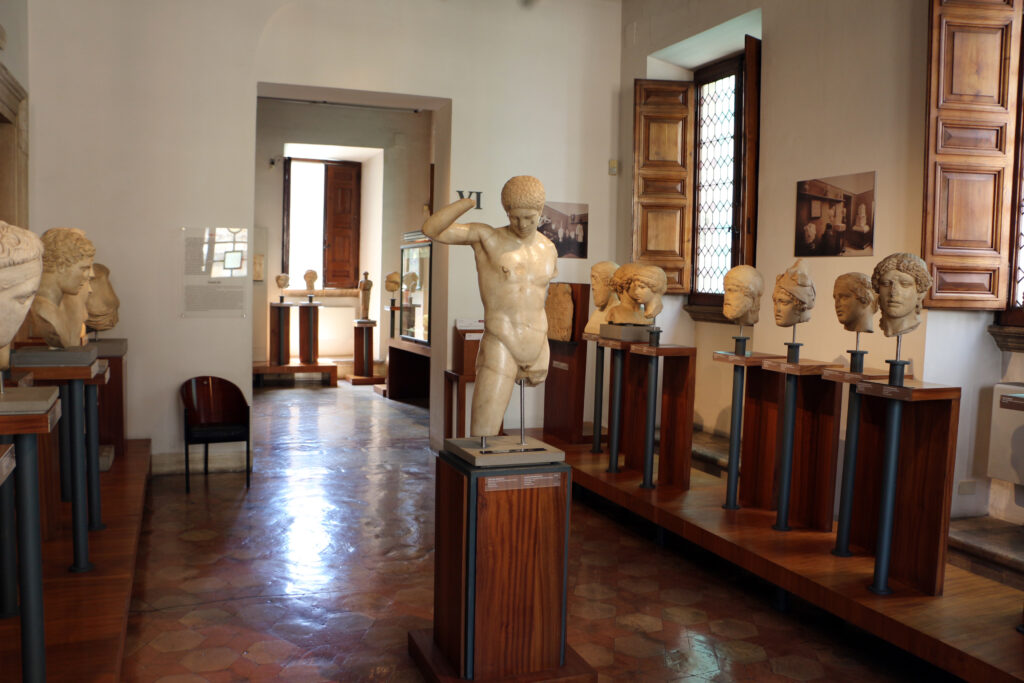
The Giovanni Barracco Museum of Ancient Sculpture is located on Corso Vittorio Emanuele II, close to Campo de’ Fiori and Piazza Navona, inside the Renaissance building known as the Farnesina ai Baullari, dating back to the sixteenth century.
The collection was created by the collector and politician Giovanni Barracco, who wanted to establish a small museum of comparative ancient sculpture where visitors could observe the similarities, differences and cultural influences shared by the civilisations that developed around the Mediterranean. In 1904, he donated the entire collection to the City of Rome.
Unlike the city’s larger archaeological museums, the Barracco Museum offers a more intimate experience while still presenting an impressive variety of cultures. Its collection includes Egyptian, Assyrian, Phoenician, Cypriot, Etruscan, Greek and Roman sculptures, together with a number of medieval works. Visitors can therefore travel across centuries of history simply by moving from one gallery to the next. After the visit, Campo de’ Fiori, Palazzo della Cancelleria, Piazza Navona and the Pantheon are all within easy walking distance.
Napoleonic Museum
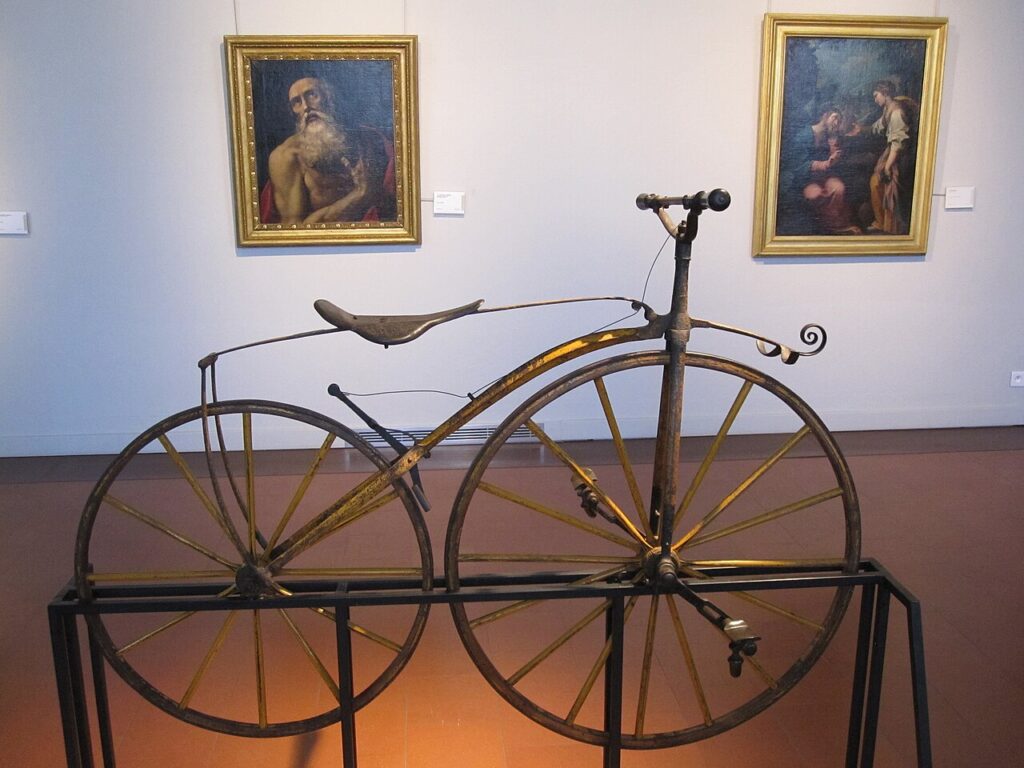
The Napoleonic Museum occupies the ground floor of Palazzo Primoli, just a short walk from Piazza Navona and the River Tiber. Its collection originates from the donation made to the City of Rome by Count Giuseppe Primoli, a descendant of the Bonaparte family through his mother, Carlotta Bonaparte.
Here, paintings, busts, miniatures, jewellery, clothing, personal belongings and family memorabilia tell a very different story from that of a traditional museum dedicated to Napoleon’s military achievements. Instead, the exhibition presents the Bonaparte family from a more intimate and personal perspective, focusing on family relationships, marriages, portraits, personal tastes and their connections with Rome.
This museum is particularly appealing to visitors interested in modern history, historic palaces and collections where personal stories intertwine with political events. By exploring its rooms and objects, visitors gain a closer understanding of the people who shaped the Napoleonic era.
Once the visit is over, it is easy to continue towards Piazza Navona, cross the River Tiber or walk to Castel Sant’Angelo, creating an itinerary that alternates indoor cultural visits with outdoor sightseeing.
Centrale Montemartini
Centrale Montemartini is one of Rome’s most unusual museums thanks to the striking contrast between its exhibits and the building that houses them. The museum occupies a former thermoelectric power station inaugurated in 1912 and later converted into an exhibition space, where Roman sculptures, mosaics and archaeological finds are displayed among turbines, diesel engines, boilers and other machinery from the original industrial plant.
The exhibition was created in 1997, when part of the Capitoline Museums’ collections was temporarily transferred to the building during renovation works. The dialogue between classical archaeology and industrial archaeology proved so successful that the power station was permanently transformed into a museum.
Centrale Montemartini is located along Via Ostiense and can easily be combined with a walk around the neighbourhood, a visit to the Basilica of Saint Paul Outside the Walls or other landmarks connected with Rome’s industrial heritage.
The Leonardo da Vinci Exhibition
Another fascinating cultural experience to include in a half-day itinerary through central Rome is the Leonardo da Vinci Exhibition, located just a short walk from Campo de’ Fiori and Piazza Navona.
Rather than a traditional museum, it is an interactive exhibition where visitors can explore full-scale reconstructions of machines built from Leonardo’s original drawings and studies on flight, mechanics, hydraulics and military engineering.
Some of the machines can be operated by visitors, making it easier to understand how the mechanisms work and demonstrating how remarkably accurate many of Leonardo’s ideas were. Visiting the exhibition offers a deeper insight into Leonardo’s extraordinary mind, revealing how he constantly connected fields that might appear unrelated, such as art, science, engineering and anatomy.
The exhibition is housed inside Palazzo della Cancelleria, one of Rome’s most important Renaissance palaces. In its underground archaeological area visitors can also see the tomb of Aulus Hirtius, the Roman consul and one of Julius Caesar’s generals, who died during the Battle of Mutina in 43 BC. Discovered in 1938, the tomb is now largely submerged by the waters of the ancient Euripus, the canal that once crossed the Campus Martius before flowing into the Tiber, making it one of the least-known archaeological sites in the historic centre of Rome.
Before or after visiting the exhibition, visitors can easily explore Campo de’ Fiori, Piazza Navona, the Pantheon and the charming streets of Rome’s historic centre, making this an ideal stop within a cultural itinerary through the Eternal City.
A Unique Idea for Your Visit
For a different kind of experience in Rome, explore the interactive Leonardo da Vinci Exhibition
You can read the Italian version of this article here >