

How can you plan a summer holiday in Rome when the weather is extremely hot? It is certainly possible, but a few strategies are needed to escape the high temperatures of July and enjoy a stress-free cultural trip.
Rome boasts an almost endless cultural heritage, ranging from the great remains of ancient Rome to Renaissance palaces, from monumental basilicas to interactive exhibitions. In July, however, the Italian capital can experience intense heatwaves, making walks through squares and archaeological sites exposed to the sun quite challenging, especially when travelling with children or pets. During the summer, it is best to schedule outdoor sightseeing early in the morning or after sunset, spending the hottest part of the day visiting cooler places such as museums, historic palaces, churches and underground sites. Whenever possible, group together attractions located close to one another to minimise travelling during the warmest hours of the day.
Table of contents
- Summer holidays in Rome
- Air-conditioned museums and exhibitions
- Underground sites
- Churches not to miss in Rome
Summer holidays in Rome
Planning a summer holiday in Rome requires taking into account the high temperatures that are now typical of July and adopting a few strategies to cope with the heat, especially when travelling with young children or pets.
First of all, it is advisable to carry a reusable water bottle filled with fresh water together with sun protection such as sunscreen, a wide-brimmed hat and a hand fan. It is also important to remember that squares, monuments and archaeological sites such as the Colosseum, the Roman Forum and the Palatine Hill are largely exposed to direct sunlight and can become very demanding during the middle of the day. For this reason, these attractions are best visited early in the morning, when temperatures are still relatively mild.
This advice applies to everyone, but even more so when travelling with children, older people or pets, all of whom are more vulnerable to heat. Dogs, in particular, should be walked early in the morning and again in the evening, avoiding the hottest hours when asphalt and Rome’s characteristic cobblestones become extremely hot. Always carry water and a portable bowl, or consider using a dog stroller and choosing shaded routes whenever possible.
By mid-morning, as temperatures begin to rise, it is preferable to move indoors and visit museums and exhibitions, which are generally air-conditioned and often offer experiences suitable for adults, teenagers and children alike.
Other places worth visiting in Rome to escape the heat include underground archaeological sites, churches and basilicas, all of which fit perfectly into a cultural holiday.
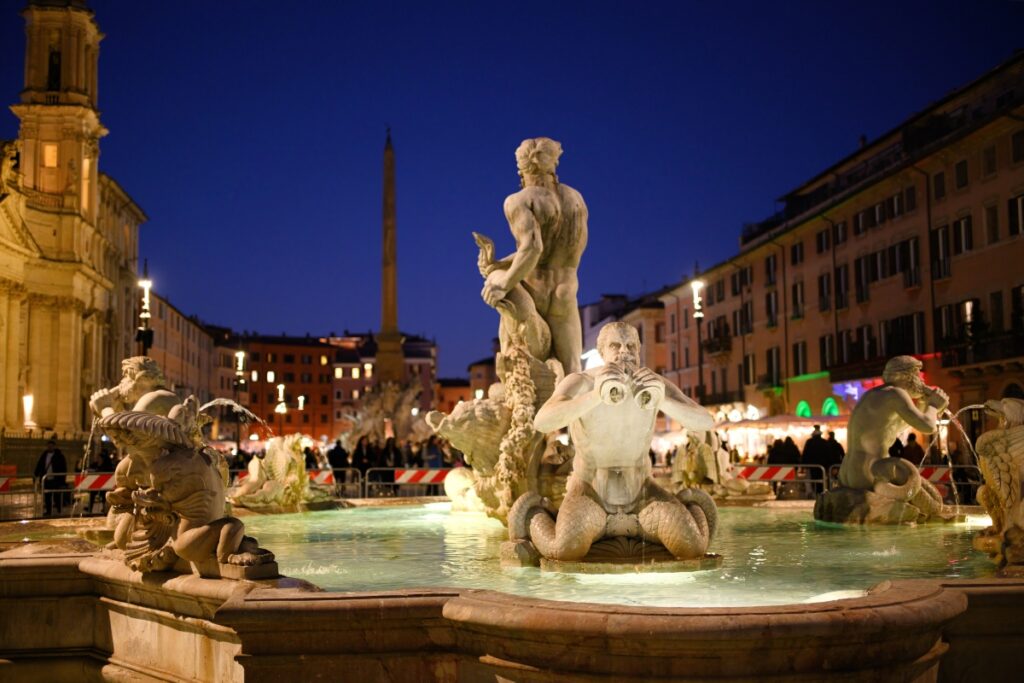
Once temperatures become more pleasant, visitors can return outdoors in the evening to stroll through Piazza Navona, Campo de’ Fiori, the Pantheon and the Trevi Fountain, or enjoy a relaxing walk in Villa Borghese Park.
In Rome with Leonardo
Add the Leonardo Exhibition to your things to do in Rome
Air-conditioned museums and exhibitions
Rome’s air-conditioned museums and exhibitions are an excellent way to enjoy the city even during the hottest days of summer. Most major museums are equipped with climate control systems, and some visits can easily occupy several hours, making them ideal during the hottest part of the day.
The Vatican Museums, for example, require several hours to explore and include extensive collections ranging from Egyptian and Etruscan antiquities to the Raphael Rooms and the Sistine Chapel. Booking tickets in advance is always recommended, and choosing less crowded time slots helps avoid long queues.
Those looking for shorter visits may include the Capitoline Museums, overlooking Piazza del Campidoglio, or the Ara Pacis Museum, where Augustus’ famous altar is displayed inside a modern museum building.
In the historic centre, visitors can also explore the Leonardo da Vinci Exhibition at Palazzo della Cancelleria. This exhibition is particularly engaging not only for adults but also for children and teenagers thanks to its interactive models, which encourage curiosity and learning. The exhibition includes full-scale reconstructions of Leonardo’s machines built from his original drawings, reproductions of his most famous artworks and displays dedicated to his scientific and engineering achievements. Located just a short walk from Campo de’ Fiori and Piazza Navona, it fits perfectly into an afternoon itinerary through the historic centre.
Underground sites
Rome’s underground sites reveal the city’s oldest layers and, being sheltered from direct sunlight, are noticeably cooler, making them an excellent option during the summer months.
One of the most fascinating places is the Basilica of San Clemente, close to the Colosseum. Beneath the current church lie an earlier basilica, Roman buildings and the remains of an ancient Mithraic temple, allowing visitors to descend through several historical layers of Rome.
On the Caelian Hill, visitors can explore the Roman Houses beneath the Basilica of Saints John and Paul, where beautifully preserved frescoes and decorations illustrate how these buildings evolved over the centuries.
Also in the historic centre is the Tomb of Aulus Hirtius, located beneath Palazzo della Cancelleria and included in the Leonardo da Vinci Exhibition. The tomb was discovered in 1938 and is traditionally attributed to the Roman consul Aulus Hirtius, one of Julius Caesar’s generals, who died during the Battle of Mutina in 43 BC. Today, the monument remains partially submerged by the waters of the ancient Euripus canal, which once crossed the Campus Martius, making it one of the least-known archaeological treasures in central Rome.
Rome’s underground sites generally maintain cooler and more stable temperatures than those outside, although visitors should always check accessibility, tour duration and booking requirements before planning their visit.
Churches not to miss in Rome
The churches not to miss during a holiday in Rome are much more than places of worship: they can be considered open museums preserving mosaics, paintings, sculptures and architecture from many different historical periods.
During the summer they also provide a welcome break from the sun. Although they are not air-conditioned, these ancient buildings often remain noticeably cooler than the streets outside thanks to their massive walls, large interiors and limited direct exposure to sunlight.
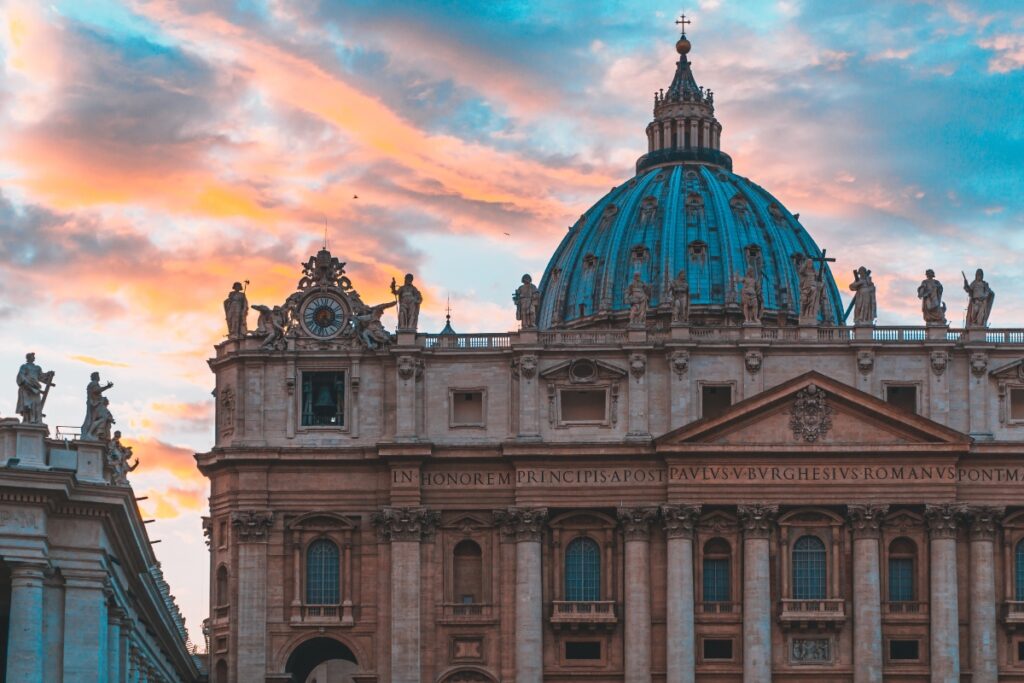
Among the four papal basilicas, St Peter’s Basilica is undoubtedly the best known, while St John Lateran is Rome’s cathedral. St Mary Major preserves remarkable early Christian and medieval mosaics and can easily be combined with a visit to nearby Santa Prassede, famous for the mosaics decorating the Chapel of St Zeno.
Not far from the Colosseum, San Pietro in Vincoli houses Michelangelo’s Moses, while in the historic centre Santa Maria sopra Minerva contains masterpieces associated with Michelangelo, Bernini and Filippino Lippi.
Churches remain active places of worship, however, so visitors should wear appropriate clothing covering shoulders and knees. Tourist access may also be restricted during religious services, and opening hours can vary, making it advisable to check the official websites before planning an itinerary.
A Unique Idea for Your Visit
For a different kind of experience in Rome, explore the interactive Leonardo da Vinci Exhibition.
You can read the Italian version of this article here >