

From astronomy to zoology, from medicine and chemistry to Leonardo da Vinci’s inventions: Rome offers a variety of museums and spaces dedicated to science and technology.
Rome is known around the world above all for its great archaeological and art collections, but the Italian capital offers many other experiences, including museums and exhibitions dedicated to science and technology. These are places where you can explore the Universe through digital projection systems, see zoological specimens, trace the evolution of medicine or discover the instruments once used in scientific laboratories. Here are five places worth discovering, from the modern Planetarium to machines designed by Leonardo da Vinci more than five centuries ago, for an itinerary that goes beyond the usual sights and is particularly interesting for families, students and young people.
TABLE OF CONTENTS
- Rome Planetarium
- Civic Museum of Zoology
- Museum of the History of Medicine
- Primo Levi Museum of Chemistry
- Leonardo da Vinci Exhibition
Rome Planetarium
The Rome Planetarium is located in the EUR district, inside the Museum of Roman Civilization, and features a dome measuring 14 metres in diameter and covering an area of approximately 300 square metres, which becomes a screen for the Universe.
The system uses 4K-resolution projection and Sky Explorer software, allowing visitors to go beyond a simple representation of the sky as seen from Earth and simulate journeys through space and get closer to the planets, observe stars and galaxies, and recreate astronomical phenomena over time.
The Planetarium therefore offers an immersive experience of phenomena that are difficult to observe directly, making it perfect for astronomy enthusiasts of all ages.
In Rome with Leonardo
Add the Leonardo Exhibition to your things to do in Rome
Civic Museum of Zoology
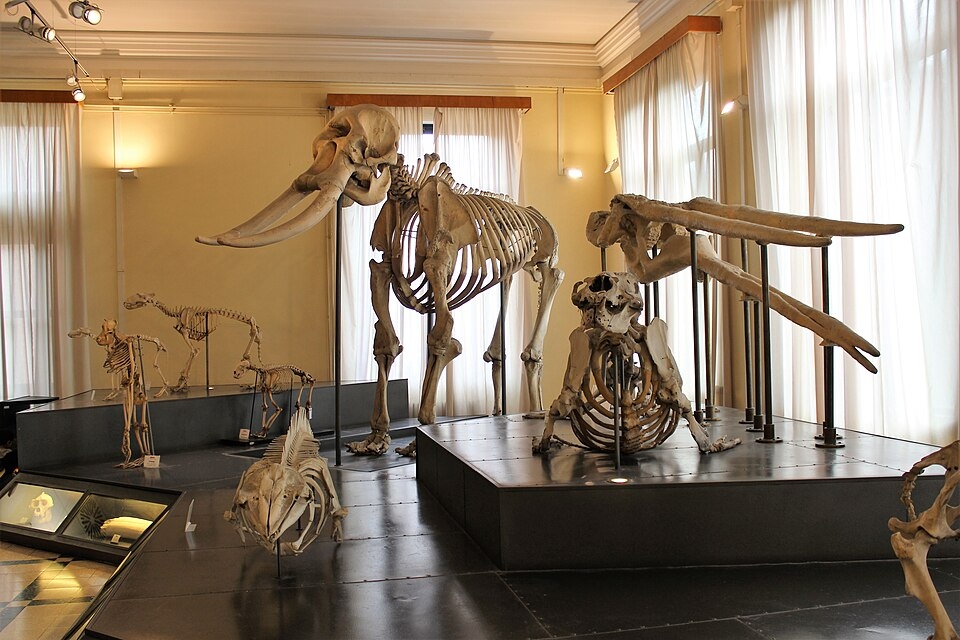
Those interested in biology and the animal world can visit the Civic Museum of Zoology, near Villa Borghese. Its collections offer an opportunity to explore biodiversity through zoological collections that originated partly from the historic collections of the Royal University of Rome and were later expanded through acquisitions, donations and specimens from the former Zoological Garden.
The museum’s scientific heritage is extensive and includes collections dedicated to mammals, birds, reptiles, amphibians, fish, insects and molluscs. The malacological collections alone contain around 2.8 million specimens, while the entomological collections hold approximately one million. Some specimens also have particular historical and scientific value because they document biodiversity in the past and allow it to be compared with biodiversity today.
As well as observing the animals, visitors can discover the important role of natural history collections in research, species classification and the study of biodiversity, making this an ideal stop for families with children and teenagers who are studying biology and natural sciences at school.
Museum of the History of Medicine
Another lesser-known science museum can be found at Sapienza University of Rome: the Museum of the History of Medicine, founded in 1938 by Adalberto Pazzini, which traces the evolution of medical knowledge through an exhibition spread over three floors.
In the basement, visitors can explore reconstructions of spaces such as an apothecary and an alchemist’s workshop, while the first floor takes them from prehistory through medicine in ancient Mediterranean civilizations and the Middle Ages to the 17th century. The exhibition then continues with the development of experimental medicine and reaches the latest challenges in biomedicine, genomics and technological applications.
The exhibition shows how our understanding of the human body and disease has changed over the centuries, as well as how methods and tools for diagnosis, research and treatment have evolved over time.
Primo Levi Museum of Chemistry
Also located at Sapienza University of Rome is the Primo Levi Museum of Chemistry, established in 1986 from a collection of instruments, equipment and documents preserved by the Department of Chemistry.
Its collections include cryoscopes, ebullioscopes, thermometers, spectroscopes and colorimeters, equipment for chemical analysis and instruments used to measure radioactivity. The museum also preserves documents and equipment that belonged to Stanislao Cannizzaro and his research group, as well as 19th-century plates illustrating equipment and technologies used in the chemical industry.
It is a journey through the history of chemical research, told through the laboratory instruments that made it possible and which, of course, have changed considerably over time.

Leonardo da Vinci Exhibition
To complete this journey through the history of science, a visit to the Leonardo da Vinci Exhibition is a must. The exhibition is housed in Palazzo della Cancelleria, just a few steps from Campo de’ Fiori, in Rome’s historic centre.
The exhibition appeals to adults as well as teenagers and children, as it offers an opportunity to discover Leonardo’s more technical and scientific side through working machines reconstructed from the drawings contained in Leonardo’s codices and to explore different fields of knowledge, from anatomy and botany to architecture, through reconstructions and multimedia content.
After exploring astronomy, zoology, medicine and chemistry, Leonardo’s machines provide an ideal conclusion to the itinerary, taking visitors back to the origins of an approach to studying reality in which scientific curiosity, observation, experimentation and invention go hand in hand.
A Unique Idea for Your Visit
For a different kind of experience in Rome, explore the interactive Leonardo da Vinci Exhibition.
You can read the Italian version of this article here >