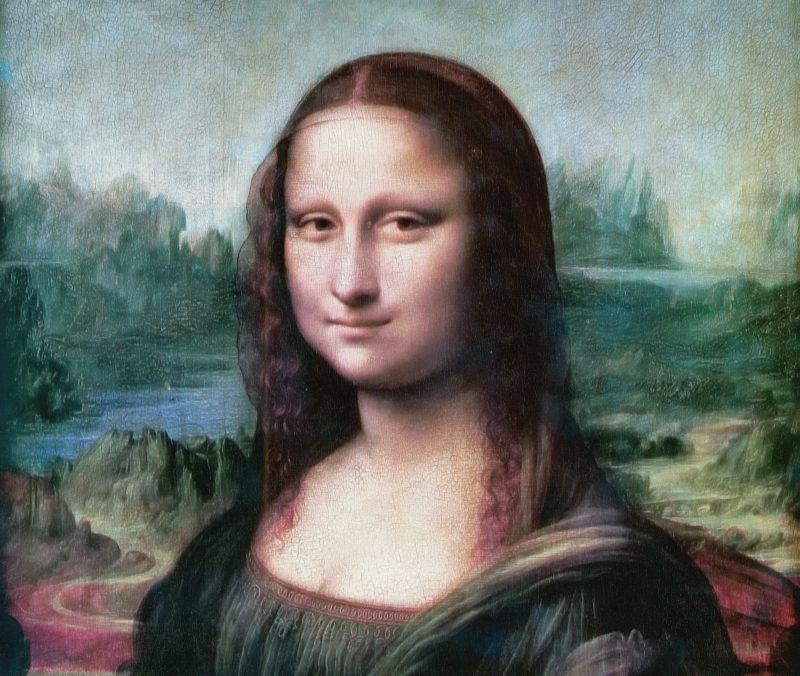

The Mona Lisa was not stolen by Napoleon. Leonardo da Vinci brought it to France, where it entered the royal collections before arriving at the Louvre.
The Mona Lisa is at the Louvre in Paris rather than in Italy because Leonardo da Vinci took the painting with him when he moved to France in 1516, at the invitation of King Francis I. The king probably acquired the work around 1518, while Leonardo was still alive, and the painting thus entered the French royal collections. Napoleon did not steal the Mona Lisa from Italy, as is often believed, because by the time the general led his military campaigns in the Italian peninsula, the painting had already been in France for almost three centuries. After being kept in several royal residences, the painting arrived at the Louvre, where it went on display in 1797, a few years after the museum opened. In 1911, however, an Italian named Vincenzo Peruggia stole it from the Louvre, believing he was returning to his homeland a work of art taken by the French. The painting was recovered in 1913 and subsequently returned to the Paris museum.
TABLE OF CONTENTS
- When did the Mona Lisa arrive at the Louvre?
- Did Napoleon steal the Mona Lisa from Italy?
- Why did Leonardo bring the Mona Lisa to France?
- How did the Mona Lisa enter the French royal collections?
When did the Mona Lisa arrive at the Louvre?
The Mona Lisa arrived at the Louvre in 1797, four years after the museum opened in 1793 during the French Revolution. Today, it is displayed in the Salle des États (Hall of States), protected by a glass case. Leonardo da Vinci’s famous painting, also known as La Gioconda, had already belonged to the French royal collections for almost three centuries, but until then it had been kept in royal residences.
The Mona Lisa became part of France’s national museum collections alongside numerous other paintings from the royal collections when the Louvre became a public museum following the French Revolution. The Revolution led to the nationalisation of the Crown’s art collections and the decision to make works of art previously reserved for the royal court accessible to the public.
However, the painting did not remain at the Louvre continuously. In the early 19th century, Napoleon Bonaparte had the Mona Lisa moved to the Tuileries Palace, where it was displayed in his private apartments before being returned to the museum.
Furthermore, in 1911, the Mona Lisa was stolen from the Louvre by Vincenzo Peruggia, an Italian who had worked at the museum and managed to take the painting away by hiding it beneath his clothes. For more than two years, the painting remained in his home in Paris while news of its disappearance spread around the world. It was eventually recovered in December 1913, when Peruggia attempted to sell it to an art dealer in Florence. Before returning to the Louvre, the painting was temporarily exhibited in Italy, attracting enormous public interest and becoming one of the most recognisable symbols of the Paris museum.
Inside Leonardo’s World
Experience interactive machines and inventions at the Leonardo Da Vinci Exhibition in Rome
Did Napoleon steal the Mona Lisa from Italy?
Between the late 18th and early 19th centuries, during the Napoleonic military campaigns, French troops seized paintings, sculptures and other works of art from Italian churches, palaces and collections. Numerous Italian artworks were indeed taken to France, and some were subsequently returned, particularly after Napoleon’s fall in 1815.
However, the Mona Lisa was not among the works of art taken during the Napoleonic campaigns. Leonardo himself had brought it to France in 1516. The painting entered the French royal collections long before Napoleon was born in 1769, so Napoleon did not steal the Mona Lisa from Italy.
The belief that the painting had been stolen from Italy is a widespread misconception and was probably also a motive behind the 1911 theft. Vincenzo Peruggia claimed that he had acted out of patriotism, intending to return to his homeland a work of art he believed had been taken by the French.
Why did Leonardo bring the Mona Lisa to France?
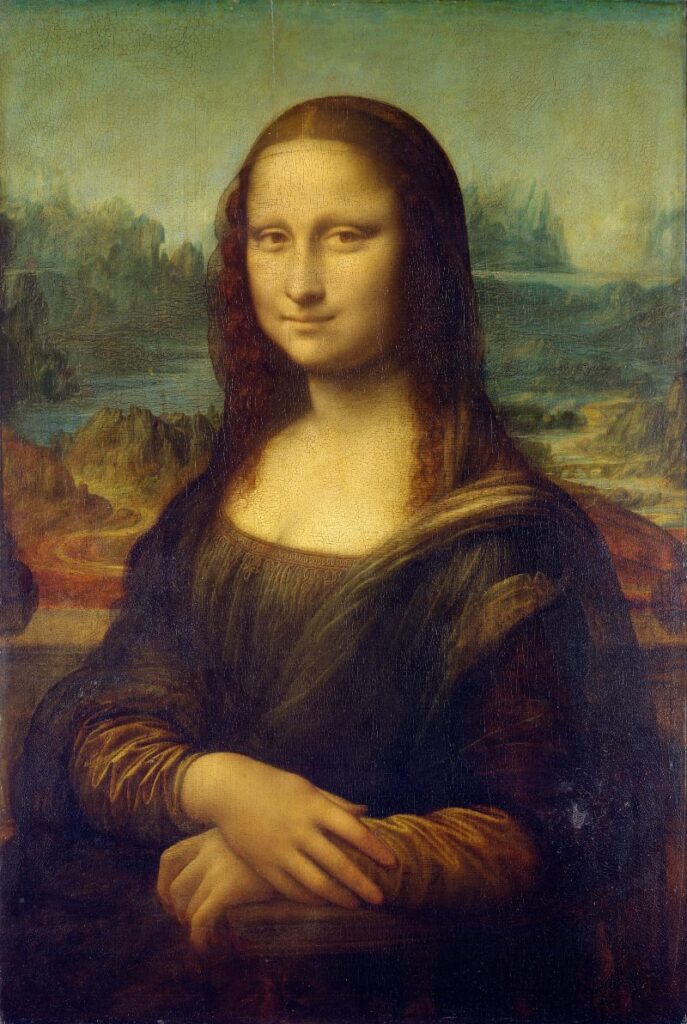
Leonardo probably began painting the Mona Lisa in Florence around 1503, and the presumed patron was the Florentine merchant Francesco del Giocondo. The painting is therefore believed to be a portrait of Lisa Gherardini, the merchant’s wife. However, Leonardo never delivered the painting and kept it for himself, holding on to it for many years and returning to work on it several times.
Perhaps Leonardo considered the painting particularly important for his artistic experiments, especially his use of sfumato, a technique that creates soft, gradual transitions between light and shadow without sharp outlines.
In 1516, Leonardo da Vinci moved to France after a long career spent between Florence, Milan and Rome, where he had worked as a painter, engineer, inventor and scholar. It was Francis I, who had become king in 1515, who invited him to France. A great admirer of Italian art and culture, the king was eager to attract some of the leading artists of the Renaissance to his court.
Leonardo accepted the invitation and settled at the Château du Clos Lucé in Amboise, near the royal residence, receiving a pension and the title of the king’s first painter, engineer and architect. When he left Italy, Leonardo took with him several paintings that he had continued to work on over the years. These included the Mona Lisa, The Virgin and Child with Saint Anne and Saint John the Baptist, three works that are now all housed at the Louvre.
Leonardo’s move to France was therefore decisive for the painting’s fate. Rather than being taken from Italy after Leonardo’s death, the Mona Lisa accompanied the artist during the final years of his life, which he spent at the French court until 1519.
How did the Mona Lisa enter the French royal collections?
The Mona Lisa probably entered the French royal collections around 1518, when Francis I acquired the painting while Leonardo da Vinci was still at his court. The exact circumstances of the purchase are not fully documented, but historical research and contemporary accounts help reconstruct how the painting passed into the possession of the French monarchy.
A document dating from 1518 records a payment made to Gian Giacomo Caprotti, known as Salaì, Leonardo’s pupil and assistant, for several paintings. The document has been linked to Francis I’s acquisition of works by Leonardo, although it does not establish all the details of the transaction with absolute certainty.
According to the traditional account, also recorded by Giorgio Vasari in his Lives of the Artists, the French king purchased the Mona Lisa for the very large sum of four thousand écus. This account reflects the importance already attributed to the painting in the 16th century, although it should be considered in light of the time that elapsed between the events themselves and Vasari’s account.
After entering the Crown’s collections, the Mona Lisa was kept in several royal residences. Over the centuries, it was housed at the Palace of Fontainebleau and later at Versailles, following the movements of the French court and the monarchs’ art collections.
With the French Revolution and the end of the monarchy, the royal collections became national property. This change made it possible for the Mona Lisa to go on public display at the Louvre in 1797, where the painting remains to this day.
Leonardo Live
Visit the Leonardo Da Vinci Exhibition in Rome and discover his machines, inventions, and much more first-hand
You can read the Italian version of this article here >