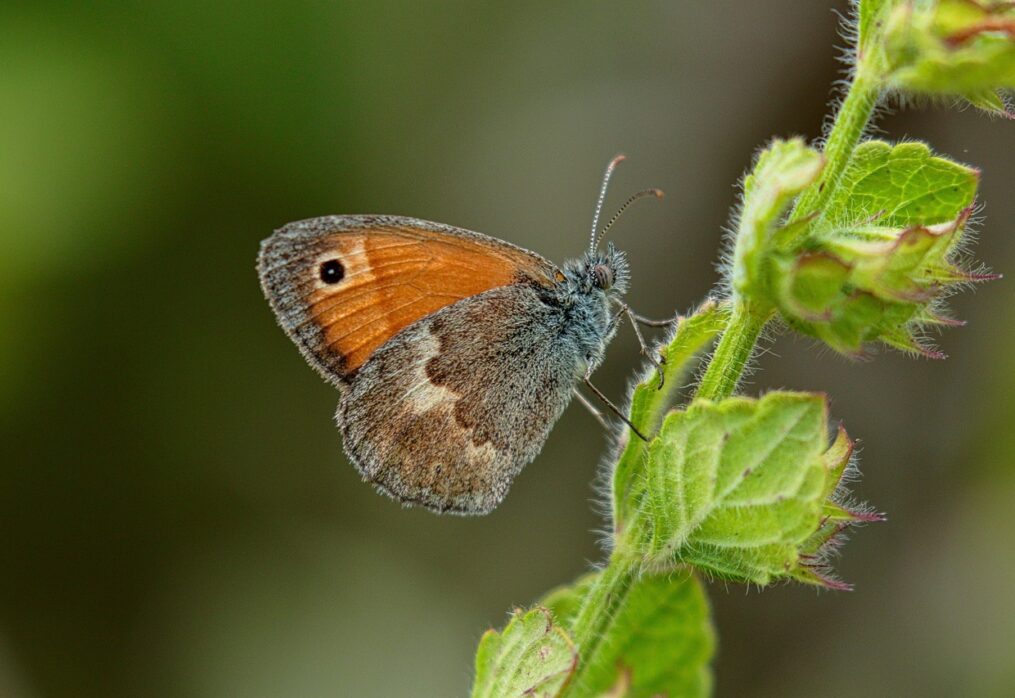

From the movement of water to anatomy, from botanical studies to observations of the air, Leonardo was a scientist and naturalist who understood nature as a living, harmonious system.
Leonardo da Vinci was one of the most forward-thinking minds of his time. A painter, engineer, anatomist and inventor, as well as a tireless observer of nature and experimenter, he combined art and science in a way that still seems revolutionary today. His method was based on direct experience and observation: he did not believe in accepting knowledge simply because it had been passed down, but only in what he could see, touch and measure. In this sense, Leonardo was a true scientist at a time when modern science did not yet exist. His notebooks contain notes and reflections on the movement of water, the growth of plants, the shapes of shells and the structure of bones. For him, nature was one great living organism, a system governed by harmonious laws that applied equally to the human body and the flow of rivers. This unified view of nature makes his scientific and naturalistic studies remarkably relevant even today.
TABLE OF CONTENTS
- Leonardo: a visionary scientist and naturalist
- Leonardo’s studies of water and air
- Anatomy and biology according to Leonardo
- Observing nature and studying botany
- Why Leonardo’s studies of nature are still relevant today
Leonardo: a visionary scientist and naturalist
Leonardo was driven by an extraordinary curiosity that led him to seek an understanding of how life works, rather than simply looking for answers to practical problems. For him, nature was a kind of text to be deciphered, rather than merely something to be depicted. This perspective emerges from his notes, in which he wrote that “nature is full of infinite causes that have never been revealed by experience“, a statement that reveals an awareness of the importance of observation more than a century before Galileo.
Leonardo was also among the first to view nature as a system of interdependent forces. Convinced that everything in the natural world was connected, he studied the human body with the same curiosity he brought to the flow of water or the structure of a leaf. He never separated humanity from the natural world, seeing both as parts of a shared balance.
Inside Leonardo’s World
Experience interactive machines and inventions at the Leonardo Da Vinci Exhibition in Rome
Leonardo’s studies of water and air
Of all natural phenomena, water was probably the one that fascinated Leonardo most. Recognising its vital role in ecosystems, he described water as “the blood of the Earth“. In his studies, he analysed whirlpools, currents, ripples and waterfalls, drawing their movements with extraordinary precision. These drawings reveal an early attempt to describe the behaviour of fluids, anticipating concepts of hydrodynamics that would be formally developed centuries later.
Similarly, he observed the air, winds and flight of birds, seeking to understand the principles governing lift and drag. In his designs for flying machines, from flapping wings to parachutes, Leonardo sought to imitate nature while overcoming its limitations, combining mechanics and biology.

Anatomy and biology according to Leonardo
Leonardo’s scientific curiosity also led him to study anatomy, dissecting human and animal bodies to understand their structure and producing drawings of extraordinary precision. His anatomical illustrations of the heart, nervous system and muscles reveal an understanding that anticipated modern medicine.
As in his other fields of study, Leonardo’s biological observations went beyond description, seeking to understand how things functioned, how different parts related to one another and the mechanics of life itself. His notes also reveal an awareness that life does not depend on a collection of separate organs, but on a dynamic balance between forces working together.
This functional and systemic view of the human body also led him to study animal movement, comparing the way humans walk with the gait of horses and the movements of birds. Leonardo considered human beings part of nature, rather than above it, an approach that makes him a forerunner of comparative biology.
Observing nature and studying botany
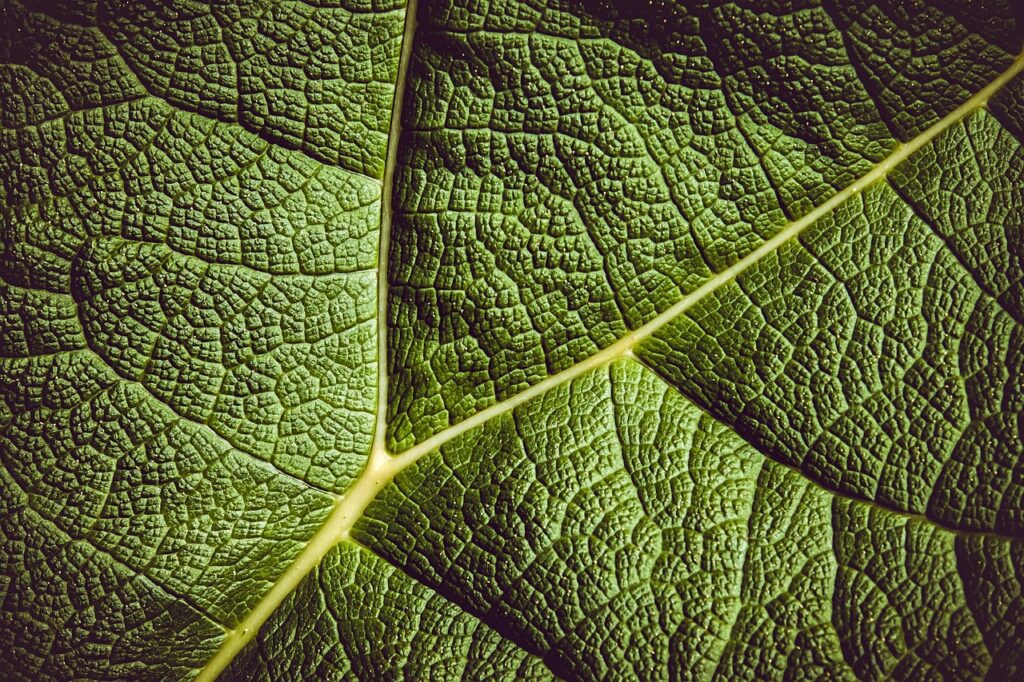
Leonardo observed plants with the same attention he devoted to animals, human beings, water and natural phenomena. In his botanical drawings, he depicted leaves, trunks and flowers with almost scientific accuracy. This precision is evident in the care with which he represented the arrangement of leaf veins, the way leaves turn towards the light and the spiral patterns found in sunflowers and pine trees. He anticipated the concept of “phyllotaxis”, which describes the arrangement of leaves along a stem to maximise their exposure to light.
In his codices, Leonardo also described the water cycle and its role in plant growth, observing how roots absorb moisture from the soil and how sap moves upwards through plants. His studies of nature were therefore not merely aesthetic, but deeply ecological, revealing remarkable insights into the constant relationship between air, water, earth and life. This perspective foreshadowed modern environmental thinking.
Why Leonardo’s studies of nature are still relevant today
Reading Leonardo’s notebooks today reveals a remarkably modern way of thinking. His vision of nature as a living system governed by balances and cycles closely resembles the principles of modern ecology. For him, everything was connected, from the beating of the heart to the movement of waves, from the shape of a leaf to that of a shell, and from human life to the breathing of the Earth.
Leonardo was a scientist and naturalist who understood that observing nature did not mean dominating it, but learning to imitate and respect it. This is perhaps the most relevant lesson of his work today. Leonardo encourages us to look at the world with wonder and responsibility, recognising in every natural phenomenon a reflection of the same intelligence that drives life.
Leonardo Live
Visit the Leonardo Da Vinci Exhibition in Rome and discover his machines, inventions, and much more first-hand
This article was originally published in Italian on 11 November 2025
You can read the Italian version of this article here >