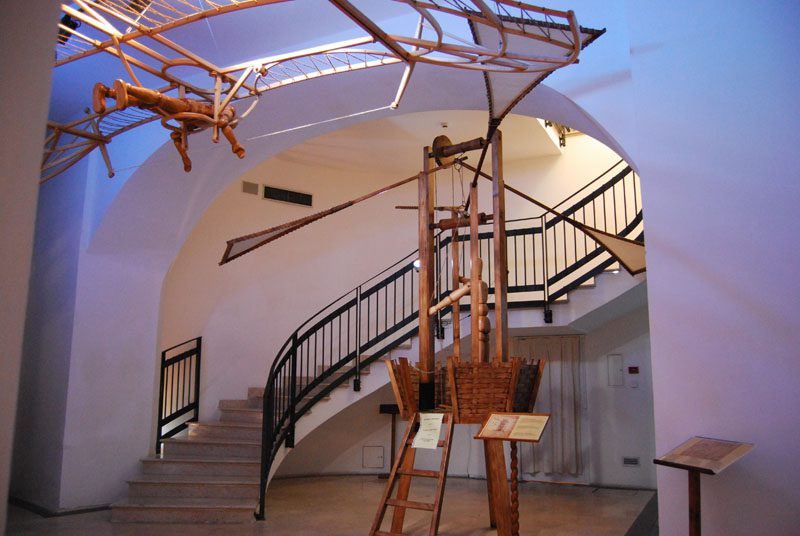

From reconstructions of ancient Rome to interactive museums, the city offers permanent exhibitions dedicated to history, art, science and Leonardo da Vinci’s inventions.
Rome frequently hosts temporary exhibitions, but there are also plenty of museums and permanent exhibitions open all year round. There are many opportunities to discover the city and its cultural heritage, including interactive exhibitions, multimedia displays and immersive experiences that offer something different from traditional archaeological museums. Some examples? Welcome to Rome tells the story of the city’s transformation through projections and reconstructions, while the Roman Houses of Palazzo Valentini allow visitors to explore homes dating back to the Roman Empire. At Centrale Montemartini, ancient sculptures are displayed among the machinery of a former power station, while Explora and the Wax Museum offer experiences that differ from traditional museums. Among the permanent exhibitions to visit in Rome is also the Leonardo da Vinci Exhibition at Palazzo della Cancelleria, where working machines, reconstructions and multimedia tools offer a closer look at the great Renaissance artist’s inventions and studies.
TABLE OF CONTENTS
- Welcome to Rome: discovering the city’s history
- The Roman Houses of Palazzo Valentini: a journey into ancient Rome
- Centrale Montemartini: ancient art and industrial archaeology
- Explora: the interactive children’s museum
- The Wax Museum: historical figures and celebrities
- Leonardo da Vinci Exhibition: machines and inventions at Palazzo della Cancelleria
Welcome to Rome: discovering the city’s history
Welcome to Rome is a multimedia experience that allows visitors to discover how the city has changed over approximately 2,700 years, from its earliest settlements to modern-day Rome, through video projections on the walls, ceiling and floor, accompanied by a narrator.
The main projection lasts around thirty minutes and is complemented by four experiences featuring animated models, including a large animated model showing how Rome evolved through different historical periods.
It is particularly interesting for first-time visitors to the capital who want to understand how ancient, medieval and modern Rome came to overlap over the centuries. The experience is available all year round and is located in the historic centre, a short distance from Piazza Navona.
In Rome with Leonardo
Add the Leonardo Exhibition to your things to do in Rome
The Roman Houses of Palazzo Valentini: a journey into ancient Rome
In the underground areas of Palazzo Valentini lie the remains of a large temple and two residences dating back to the Roman Empire, uncovered during excavations that began in 2005, along with evidence of an important monumental complex from ancient Rome.
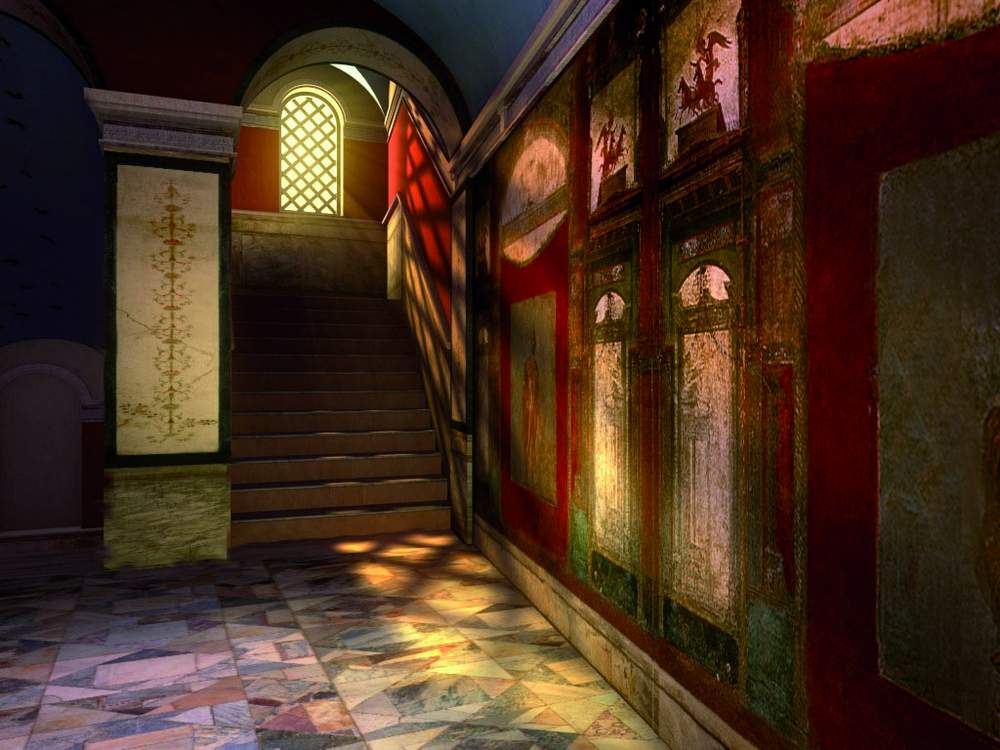
What makes a visit to the Roman Houses of Palazzo Valentini, near Trajan’s Column, particularly special is the way the archaeological remains are presented, through light projections, virtual reconstructions and a narrated experience developed as part of a project by Piero Angela and Paco Lanciano.
The floors, walls and rooms of the ancient residences are visually reconstructed, helping visitors imagine the buildings’ original appearance, understand the layout of the rooms, admire the mosaics and discover how Roman homes were organised.
Visits take place at scheduled times, with different types of tours available, including those exploring the history of Trajan’s Column. The entrance is at Via Foro Traiano 84 and, as visits follow a fixed schedule, it is advisable to check availability in advance.
Centrale Montemartini: ancient art and industrial archaeology
Centrale Montemartini is perhaps one of Rome’s most unusual museums, as it houses a collection of sculptures, mosaics and archaeological finds from the Capitoline Museums inside a former thermal power station. The building opened in 1912 as Rome’s first public electricity-generating plant and was later converted into a museum in 1997.
The exhibition includes artefacts from temples, public buildings and private residences of ancient Rome, as well as a section displaying the carriages of Pope Pius IX’s train. All of these are exhibited alongside turbines, diesel engines, boilers and other industrial machinery preserved in their original surroundings, creating a striking contrast with traditional archaeological museums. One of the most distinctive spaces is the Engine Room, where sculptures are displayed alongside the equipment once used to generate electricity.
It is an interesting place to discover a lesser-known part of Rome’s archaeological heritage, in a building that also tells the story of the city’s industrial past. Alongside its permanent collection, which can be visited throughout the year, Centrale Montemartini also hosts temporary exhibitions.
Explora: the interactive children’s museum
Rome also offers plenty of permanent exhibitions to visit with children, including Explora, a museum just a short walk from Piazza del Popolo designed to encourage learning through play and experimentation, with interactive installations that invite young visitors to take part in activities.
The subjects range from science and new technologies to art, the environment and sustainability, with experiences that allow children not only to observe but also to experiment, helping them understand everyday phenomena and situations. Children are encouraged to explore independently, while accompanied by adults.
It is an educational and engaging activity that allows children to learn through hands-on experiences. Visits are organised into sessions lasting one hour and forty-five minutes, with limited admission numbers to prevent overcrowding.
The Wax Museum: historical figures and celebrities
Another permanent exhibition in central Rome is the Wax Museum, near Piazza Venezia, which offers a very different experience from the painting and sculpture collections found in traditional museums.
Founded in 1958, the museum houses wax figures representing people from different historical periods and fields, from history and politics to religion and entertainment.
Museums like this have a charm of their own, as visitors can get a close look at life-size figures of famous personalities and appreciate the techniques used to recreate their faces, expressions and clothing. The museum also offers digital tools and interactive content to help visitors learn more about the people represented.

Leonardo da Vinci Exhibition: machines and inventions at Palazzo della Cancelleria
Among the permanent exhibitions in Rome dedicated to art, science and technology is the Leonardo da Vinci Exhibition, housed at Palazzo della Cancelleria, just a short walk from Campo de’ Fiori and Piazza Navona.
Opened in 2009, the exhibition offers visitors the opportunity to explore Leonardo’s studies and inventions through a display of large, working wooden machines reconstructed from the designs found in Leonardo’s notebooks. Visitors can observe the mechanisms and, where permitted, operate them directly, gaining a better understanding of inventions related to mechanics, engineering and the study of motion.
The exhibition also features seven themed display cases dedicated to different areas of Leonardo’s research, including anatomy, botany, architecture and theatrical machinery, with reproductions of his notebooks and digital tools offering further insights. A multimedia section, Da Vinci, A New Dimension, uses nine holograms to show some of Leonardo’s machines in motion, making it easier to understand how they work and the principles behind his ideas.
The visit also includes a fascinating archaeological feature: in the underground areas of Palazzo della Cancelleria, visitors can see the tomb of Aulus Hirtius, a lieutenant of Julius Caesar who died in 43 BC. Discovered in 1938, the tomb is partially submerged beneath the waters of the ancient Euripus canal. The exhibition therefore offers visitors the opportunity to explore both Renaissance inventions and archaeological remains from ancient Rome within the same building.
A Unique Idea for Your Visit
For a different kind of experience in Rome, explore the interactive Leonardo da Vinci Exhibition
You can read the Italian version of this article here >